Showing posts with label Oxford University. Show all posts

Friday, 3 November 2023

Michael Cross' memories

I enjoyed this account of going to Oxford University in the 1950s... by Michael Cross.

There are mentions of quite a few former GA Presidents along the way.


A few extracts

There were also, I remember, the Admiralty Handbooks. These were written by geographers in both Oxford and Cambridge during the War years to inform the military of the history, geography and culture of countries in the sphere of war.

We were all well aware of the Davisian cycle of erosion and it seemed almost to be geomorphologically 'fashionable' to look for erosion surfaces - they seemed to play such a major part in the interpretation of landscapes. Wooldridge and Morgan's Geomorphology along with Wooldridge and Linton's Structure, Surface and Drainage in South East England were necessary 'reads'. We were also made aware of a new (to most of us) hypothesis challenging Davis's, one formulated by Penck - summarised by "wearing back as opposed to wearing down". Little were we to realise that over the decades to follow another half dozen or so hypotheses would be suggested by competing geomorphologists. (I have often thought that it would be true to say that wherever two geomorphologists are gathered together, they will disagree!)

Research on frontal systems had only properly got underway in the inter-War period. Air masses were new to us. The then latest edition of Austin Miller's Climatology had what appeared to be an added chapter, Air Masses, and we were advised to buy this edition and avoid older second-hand copies without it. I find it remarkable that today it is routine for TV weather forecasters to refer to air masses in their forecasts. Similarly, most had not heard of the jet stream. I believe some empirical knowledge of jet streams was gained by fighter pilots over Japan in WW2 but it only 'filtered through' to the general public with the growth of high-level airline flights in the 1960s and beyond. During my three years I cannot recall any mention being made, detailed or otherwise, of the jet stream.

Jean Brunhes 'classic' text La Geographie Humaine, although nearly forty years old, was recommended reading, as was The British Isles by Dudley (later Sir Dudley) Stamp - aka 'Deadly Dudley'! 

I wonder why he was Deadly Dudley... as in deadly dull?

In 1954, the annual meeting of the British Association was held in Oxford and thus the accompanying volume The Oxford Region was an up to date source. Edited by my tutor A F Martin and by R W Steel, other familiar names are listed on the Contents page (Dr Steel left midway through my time at Oxford and went on to become Professor of Geography at Liverpool.)

Reference:

https://www.geog.ox.ac.uk/alumni/news/181127-mcross-1950-geog.html

Wednesday, 4 October 2023

The Herbertson Society

From time to time, echoes of the GA's past, and some of its most illustrious names resurface.

The Oxford University Geography Society appeared on my Instagram earlier and it turns out that it was originally called the Herbertson Society after A. J. Herbertson.

Previously called the Herbertson Society, Oxford’s original geography society was named after renowned geographer Andrew John Herbertson (1865-1915), one of the first Readers at the University’s School of Geography – which was itself one of the first geography departments at a university in Britain!

The original society ceased to exist in 2011, but in the academic year 2014-15 we relaunched Oxford Geography Society to celebrate the 100th anniversary of Herbertson’s death.


That event is also mentioned here. This is a very useful source of information.

There is some useful additional information here about his work.

Sadly, the heavy work-load and an ongoing heart condition took their toll on him and his family: On 31st July 1931 Herbertson died at his home near Chinnor, just short of this 50th birthday. His wife died two weeks later. They lie buried together in Holywell Cemetery, not far from the School of Geography.


1924 - Foundation of the Herbertson Society

"The idea of having a student society was first put forward in 1923 when a Hertford undergraduate, E. W. Gilbert, wrote two pages in the departmental suggestions book. He argued that a society should be formed for the students of Geography and that it should seek to promote social activities as well as the holding of meetings with lectures. He went on to suggest that it be called the Herbertson Society in memory of Herbertson." (Scargill, 1999, p. 39)

Saturday, 10 September 2022

GA Summer Schools

While in the archive, I found a few boxes of folders of materials linked with the GA's involvement in Summer Schools.

These were held in the Summer (naturally) as an additional event at a time when the GA's main Annual conference took place over the New Year period. There were also Spring Conferences for some time.

They involved a great many of the 'great and the good' including academics and teachers. They were abandoned in the 1940s, and revived for a while in the 1950s and 1960s with many international locations for these courses which ran for 2 or 3 weeks and included travel.

Here's a description of one from 1949 in 'Geography'.

When I next head for Solly Street, my plan is to dig out the box and look at some of these events that happened in interesting locations and find out who was involved.

Source

British Geography: edited by Robert Steel (PDF download)

Saturday, 27 August 2022

From the archive: Centenary Celebrations 1993

I visited the GA Archive in Solly Street two weeks ago.

I came across some pictures from the GA's Centenary celebrations.

There were some of the Centenary dinner held at Keble College, Oxford and others of the visit by Princess Anne. 

Here's a few of the GA Council meeting in November 1993 when the centenary was celebrated, along with a special cake.


There are some familiar faces here, including the President at the time: Andrew Goudie with the cake.

If anyone spots someone in particular, please get in touch.

Thursday, 26 August 2021

Geography in the Long Vacation

An excellent blog post from the Bodleian Libraries account is helpful for providing some further information on the summer schools that were organised by Frances and A J Herbertson in the early days of the Oxford University geography department.

They were particularly influential and drew on the expertise of other geography educators as well as helping the next generation of geography educators with their innovative ideas. As the blog says:

The summer vacation courses were designed chiefly for schoolteachers. Held to coincide with the school holidays, they were open to anyone. Those attending spent a couple of weeks in Oxford during August for a special course of lectures and practical work in geography. The courses included field trips (for surveying and map drawing) as well as excursions to local places of geographical interest.

Wednesday, 2 June 2021

Image of the Day - 1901


Source:
GILBERT, E. W. “Andrew John Herbertson 1865-1915: An Appreciation of His Life and Work.” Geography, vol. 50, no. 4, 1965, pp. 313–331. JSTOR, www.jstor.org/stable/40565956

Thursday, 20 May 2021

Happy 128th birthday to the GA

The Geographical Association was founded at a meeting at Oxford University on this day in 1893.  And the rest.... is geography.


Sunday, 14 March 2021

Tuesday, 2 March 2021

Oxford University Geography Department and women

An interesting lecture on video which features many former GA Presidents and also Fanny Herbertson along the way as it tells the story of the department's changing relationship with women students (and tutors). The Herbertsons established summer schools and there are some useful insights into this time, when a great many graduates were introduced to new ways of thinking and working. Even today, maleness is still a major factor, such as the names of the Chair and prizes.

This event forms part of the University’s celebrations marking 100 years since women were first permitted to take degrees in Oxford. Dr Elizabeth Baigent, Reader in the History of Geography at the University of Oxford and former Research Director of the Oxford Dictionary of National Biography, uncovers the contribution of women to Oxford’s School of Geography – an institution whose history is generally told in terms of historic male endeavour. By uncovering the lives of women staff and students from the establishment of the School at the end of the nineteenth century, Liz explores the varied contributions of the School’s women and their connections with wider movements such as women’s suffrage – as well as asking why we have until now regarded them as marginal and unimportant.

Wednesday, 23 December 2020

1993: Professor Andrew Shaw Goudie

Last updated August 2023

What other subject tells us so much about the great issues of our age – global change, natural and human?
Professor Andrew Goudie, University of Oxford.

Andrew Goudie is a geomorphologist, and a leading expert on drylands.

He has published a vast range of books, articles and other papers, and received numerous awards for his work. Andrew sent me a CV which included almost 30 pages worth of links to papers and other publications and contributions over the years.
I have been lucky enough to hear Andrew speak several times, and was on the same 'bill' as Andrew at an Oxford GA Branch conference some years ago. The most recent event we both attended was a 75th anniversary event for the Field Studies Council at the Linnean Society in London, where Andrew gave a presentation which referenced several former GA Presidents.

Much of this entry was made up of contributions from Andrew himself thanks to a questionnaire I sent round to all the GA Presidents I could.


Image: Andrew Goudie supplied - copyright rests with Andrew Goudie

I am grateful to Andrew for sending through a number of documents to help me with the creation of the blog, including images of Presidents I was having difficulty tracking down who have already been featured - I also found some additional images from other contemporary Presidents as the blog has reached nearer to the present day.

I also mentioned him to William Atkins, author of the amazing book on the deserts that he wrote a couple of years ago.
Andrew also got a mention from a later GA President Keith Grimwade, who went to Jesus College, Oxford. 
He told me: 
"the mid to late 70s was also an exciting time to be an Oxford geographer because having lost out to Cambridge and elsewhere in the quantitative revolution, it was just beginning to pull ahead with its work on the environment and climate, led by someone else who was to become a GA President, Andrew Goudie". 

Andrew also hosted the GA's Centenary celebrations as he was the President of the GA during the Centenary celebrations. I have already shared some of the images that were sent to me by Sheila Jones, who was at the event and passed through some excellent resources, including some photos of the celebration and futher details. They will be posted around the time of this post, so visit the blog to see more.

Andrew was born in 1945 in Cheltenham.
He was educated at Dean Close School (Cheltenham) and went on to Trinity Hall (Cambridge) to study geography (of course).

Qualifications:

B.A. Cambridge (1967) 
M.A. Cambridge (1971) 
M.A. Oxford (1971) 
Ph.D. Cambridge (1972) 
DSc. Oxford (2002)
These also included the highest grades, and distinctions.

Throughout his entire career he has worked as an Oxford academic, and is also the author of many books and papers on a range of topics, notably deserts, drylands and geomorphology.
He has held posts in a number of Oxford colleges including Master of St. Cross College and also Pro-Vice Chancellor. He has held visiting Professorships and posts in a number of other organisations as well. 
He was the first professional geographer to lead an Oxford college.
As with other former GA Presidents, he has a connection with the Pitt-Rivers Museum in Oxford.

He has advised numerous committees and other organisations as well.
He has been awarded a great many prestigious awards within the discipline of geography - these include:
  • Cuthbert Peek Award of the Royal Geographical Society (1975) 
  • Publications Award of the Geographical Society of Chicago (1983) 
  • Founder’s Royal Medal of the Royal Geographical Society (1991) 
  • Mungo Park Medal of the Royal Scottish Geographical Society (1991) 
  • Gold Medal, Charles University, Prague (1998) 
  • Prix de l’Académie Royale de Belgique (2002)
  • Linton Award of the British Society for Geomorphology (2009) - named after another former GA President David Leslie Linton.
In many ways, Andrew also has a close connection with many of the GA Presidents of the 1930s-60s in that he has been involved in a great deal of advisory work at the very highest level, which have connected him with many learned societies in addition to the GA, and international bodies as well.
These have included:
British Academy, BGRG, RGS-IBG, Royal Society.

He was also involved in the Action Plan for Geography.

Outside of the academic world, he is also involved in CPRE and a Trustee of the Jurassic Coast Trust - both of which connect him to the work of other former GA Presidents of course, particulary Denys Brunsden.
He has had Editorial roles on a number of publications, and spoken at events around the world. He was linked with this 2018 BBC World Service broadcast.

Andrew has also led expeditions to places such as the Karakoram, Kenya and Australia. I am sure I remember seeing him and/or Denys Brunsden speaking about it at Sheffield University as a 6th former.

When he became the GA President, Andrew was a high profile academic and Professor of Geography at Oxford University - the university associated with the GA's founding a century earlier of course.

Andrew told me:
"I was charged with helping with the Centenary celebrations. 
I have given huge numbers of lectures to GA branches over the years. 
I established, with Denys Brunsden, the Classic Landforms series. "

These books have been best sellers from the GA Shop for some decades and are still available to purchase even now. Here's the Dark Peak volume, which I used myself when teaching, along with the White Peak volume, and the one on the North Norfolk coast. They are many people's first experience of GA publications and activity and will be found on the shelves of many geography departments around the country I am sure.

Andrew had written numerous articles for GA journals, particularly 'Teaching Geography' where he has tried to educate teachers in the correct approach to teaching about drylands.

Andrew said:

"I have always been a Geographer and have always believed that the state of geography in universities depends on attracting good sixth formers to become undergraduates."

This was an important factor in the decision to write my book 'Why Study Geography', which came out in October 2020.

Andrew's Presidential Lecture was called 'The Nature of Physical Geography: A View from the Drylands".


In it, Andrew talked about his career, and the importance of these often overlooked parts of the world, and some of the scholars who had come before and to whom he was indebted - a common theme for many Presidents.
Of landscapes, he said they are:
"one of the greatest gifts to human kind. Let us study them and therefore enjoy them and let us expose our students to great landscapes whether in Britain or overseas! Landscape has a great potential to stimulate interest in Geography in the young and in the lay person..."

He also referenced another former GA President: Sidney Wooldridge, speaking in 1949:

"By what right can we withhold a knowledge of how our terrestrial home is constructed, the meaning of its scenery and the patterns of its sky. The world contains not only factories, farms, railway sidings, market places etc but the blue hills on the skyline, the winding valleys which traverse them, russet bracken covered slopes and heather fells and the ever changing incident of long and varied coastlines."

He also predated the modern movement towards avoiding the use of the term "natural disasters". 

He said:
"it is probably best no longer to use the term 'natural hazard' because many hazards are only quasi-natural"

Andrew has written on the theme of the divide between school and academic geography, and how this might be dealt with.
He also published a paper in The Canadian Geographer in 2016 on divisions between human and physical geography - another ongoing debate in the subject discipline.

Andrew remains as busy as ever.

I was interested to see that one of the PhD students that Andrew supervised was Rita Gardner, former Director of the Royal Geographical Society. Another was Nick Middleton, who has appeared on TV himself, talking about some of the world's extreme environments.

In 2003, Chris Kington asked a number of former Presidents what had sparked their passion for geography. He lent me the letters that he had in reply and Andrew replied.
He says of his spark that it was:
"I was eight or nine and we had a family holiday that took us to Lyme Regis. I collected ammonites. I then got acute appendicitis and the minister at the Kirk in Cheltenham who gave me a book on fossils... When I was better I sought them out all over the Cotswolds."
Many thanks to Chris Kington for the loan of the letters.
References
Oxford University Staff Page - some details of Andrew's academic work.

Andrew provided me with a CV with hundreds of books, papers and other published output. Here are a few examples to jog your memory perhaps:
Why the Devil’s punchbowl dries up. Geographical Magazine 50(6), 381-386 (1978) (with M. J. Day) Chill winds over India. Geographical Magazine 411-416 (1979) 
Fearful landscape of the Karakoram. Geographical Magazine pp. 306-312 (1981) 
The disintegration of rock by mechanical processes. Teaching Geography 6, 176-179 (1981) 
Man, maker of landscapes. Geographical Magazine (1987)

If anyone has anything else to add about Andrew, and memories of his contributions to the GA, please get in touch.

Update March 2021

Updated August 2023

Out in November 2022, in collaboration with Denys Brunsden. 


Monday, 21 December 2020

1993 Centenary Celebration Weekend

This took place at Keble College, Oxford on the 2nd-4th of July 1993

Sheila Jones kindly send me a list of the delegates along with some hand-written comments to identify some of the names from her memory.

Andrew Goudie told me: 

The Centenary celebrations went off well and we had a fantastic, packed out, five course dinner in Keble College, attended by the Director of the RGS, the head of National Geographic (Gilbert Grosvenor) and the Secretary of State for Education (John Patten).
I have been awarded a Gilbert Grosvenor Medal as it happens :)

Here's the programme for the event.

If anyone has any memories of this event - perhaps you were there, or recognise any names then let me know.

I presume this is OK under GDPR as it took place 27 years ago and doesn't identify anyone's current location or details... Former GA Presidents are emboldened.

Miss H Arnold, York - schoolteacher

Mr A R Astles, London

Patrick Bailey, Leicester

Mrs. K M Balch, Eastbourne

Prof W G V Balchin, Ilkley

Mr R A C Barr, Northampton

Ms B L Beard, Loughborough

Mr. Trevor Bennetts, Eastleigh - HMI - more on Trevor in a separate blog post

Miss Sue Bermingham, Manchester - still very active

Ms L Beskeen, Bristol - a teacher, on the local GA Branch committee

Dr J A (Tony) Binns, Hove - Tony Binns, now based in New Zealand

Ms Rachel Bowles, London - another GA legend who will have her own blog post on the blog

Dr Mike Bradford, Manchester

Mrs K Broadbent, Oldham

Prof. D Brunsden, Bridport

Mrs. V P Bulbick, Bournemouth

Mr. D Burtenshaw, Bedhampton

Miss Margaret Caister, Islington - HMI

Miss J Campbell, Shewsbury

Mr. Simon Catling (& Mrs L Catling), Oxford 

Miss D Challis, Tetbury

Mr R Chapman, London

Mrs P A Clarke, York

Mr M J Clatworthy, Oxford

Miss Pat Cleverley, Bristol

Professor Alice Coleman, London

Mr Graham Corney, Oxford - https://www.researchgate.net/scientific-contributions/Graham-Corney-81702509

Mr M Cribb, Hampton Hill

Mr Richard Daugherty, Swansea

Mr J Davey, Oxford

Mr Vic Dennison, Bristol

Mr A Dixon, Oxford

Miss C Donaldson, Brighton

Mr. Ralph Dunkley, Purley

Mr L H Elliott, London

Mrs J Elson, Exeter

Ms D Farmer, Wrexham

Mr M and Mrs. Marcia Foley, Rotherfield - Marcia Foley is a name from the past - see later...

Ms E and Miss J Frew, Manchester - Jennie Frew is still a Vice President of the Manchester GA Branch

https://www.geography.org.uk/GA-Manchester-Branch

Professor Andrew Goudie, Oxford - hosted the event

Mr P Gwilliam, Southend on Sea

Prof Peter Haggett, Bristol - a great supporter of the local branch

He appears in one of Sheila Jones' pictures.

Mr B Harris, London

Ms S M Harvey-George, Falmouth - found on LinkedIn - a geographer in Truro

Mrs A M Hayes, Oxford

Miss B E Hayward, London

Dr John Hemming, London - An IBG rep. Director of the RGS in due course.

Mr M and Mrs. E Hewitt, Bickley

Dr Gladys Hickman, Edinburgh - a great innovator according to Sheila Jones, and her own Education tutor who inspired her. Sadly died in 2006, and has her own post on this blog. An early school textbook author.

Dr Graham Humphrys (& Mrs. R), Swansea

Mrs J Janikoun, Bromley - Jan Janikoun - wrote a book for Primary Geography with Marcia Foley

Mr. R Jones and Mrs. E A Jones, Stone - Bob Jones, from the GA Staffordshire branch - he kindly put me up when I spoke at the branch about 10 years ago.

Miss Sheila Jones, Bristol

Mr. Chris Kington, Cambridge

Mr Jeremy Krause, Chester

Ms J. H. Lawley, Bury - a Headmistress who was 'always at conference'

Mr. R A Leake, Market Bosworth

Miss Julia Legge, Sheffield - involved with the GA as an administrator

Dr G E D Lewi, London

Mrs. Judith Mansell, Watford - former RGS Education Officer, and also involved with the GA as Trustee

Mr R A H Marshall, Manchester

Mr. Alan Marvell, Swindon - still heavily involved with the GA in the Post-16 committee

Mr Robert May, Cheltenham - GA Branch officer, has his own post on the blog

Professor Bill Mead, Aylesbury

Mr D C Money, Bedford - author who has been mentioned early on the blog, and had a fascinating life - a keen contributor to GA events.

Miss N Moon, Swindon

Mr. R B Ll Morgan, Repton

Mrs. Wendy Morgan, Ipswich

Mrs. S Morris, Croydon

Mr Mike Morrish, London

Mr Michael Naish (& Mrs. S), Bromley - Education tutor in London, and previously mentioned on the blog

Ms H. Niemann, Burgewdl, Germany - an international attendee; common at GA Conferences now, sometimes with the support of the GA's International SIG.

Mr M and Mrs M O' Leary, Nottingham

Mr Keith Orrell, Wakefield - very active, and has his own post on the blog

Professor Allan Patmore, North Ferriby, Hull

Mr M and Mrs. E Pearson, Preston

Miss J Pugh, Leicester

Mr A Powell, London

Mrs Eleanor Rawling (& Mr J Rawling), Oxford

Mr M K Reeves, Rolle, Swizerland

Mrs Margaret Roberts, Sheffield

Miss Rosemary L Robson, Eastbourne - She was chair of the Secondary School committee (on which I served for 14 years) and a very efficient one. She served a similar period to Sheila Jones, who sent me these notes. She feels that she should have been President, but was never selected by the hierarchy at the time.

Mr John Rolfe, Boreham Wood

Mr N Rosser, Malvern

Mrs E Sawicka, Solihull

Mr Neil Simmonds, Worksop - teacher

Mr D G Smith, Oxford

Miss M Smeaton, Worcester - lecturer

Miss Frances Soar - GA Staff

Mrs C Speak, Shaftesbury

Dr Derek Spooner, Hull

Professor Robert Steel, Swansea

Rev C H and Mrs. D Stephens, Nottingham

Mr Michael Storm, Reading

Mrs Andrea Tapsfield, Warwick - HMI and involved with the GA for many decades - still active now, and recently worked on the Mentoring section of the GA website - will have her own post on the blog.

Mr C C Taylor, Newcastle upon Tyne

Mr Rex Walford, Cambridge - and Mrs. Wendy Walford

Ms. J Webb, Melton Mowbray

Ms A Whipp, Llanbedr-y-Fro

Mrs D White, Bournemouth

Prof M Williams, Swansea

Mr D and Mrs. C Williams, Norwich

Professor Michael Wise, London - & Mrs. B Wise

Miss M B Woodward, Ramsgate

Mrs. G Wraith, Chesterfield

Mentioned here: she taught at Lady Manners School, Bakewell

“The Geographical Association.” Geography, vol. 61, no. 4, 1976, pp. 263–271. JSTOR, www.jstor.org/stable/40568595. Accessed 6 Dec. 2020.

Ms P Wilson, Bedford - very busy GA activist

Here are 2 photos from the many provided by Sheila Jones.

The first has an interior view of Keble College, Oxford.

I recognise several people there, including Patrick Bailey talking to Trevor Bennetts, Bob May and Gilbert Grosvenor of the National Geographic Society.

Another picture from Sheila is this one from the garden.


I recognise quite a few former GA Presidents there including Michael Bradford, Rex Walford, Simon Catling and Eleanor Rawling.

The lady in the blue dress in the middle of the photograph, with the brown handbag is Elizabeth Fleure, daughter of Professor H J Fleure - a link to the GA's origins a century earlier...

All memories and further details of any delegates that you recognise, such as names, jobs etc would be very welcome to help flesh out this post further.

Monday, 7 December 2020

1991: Eleanor Rawling MBE

Update July 2022
The GA is and has always played a vital role as a source of geography subject expertise, advice and community for geography teachers and geographers.
It is crucial that such a body exists in times of continuing educational and curriculum change and so I have felt it important to be involved and to contribute when I can.
I have also found it a place of friendship, intellectual challenge and social activity.
Eleanor Rawling (personal correspondence)

Eleanor Rawling has been involved in a wide range of geographical education activity for many decades, and has influenced the practice of many classroom teachers. Indeed, one could argue that she has done more than most to influence the geography that is taught in schools, particularly those that follow the National Curriculum.

Thanks to Eleanor for providing some useful information on her career and involvement with the Geographical Association.

Eleanor was born in Gloucestershire in 1949, and grew up in the Cotswolds.
She attended Chosen Hill Grammar/Technical School, Churchdown, Gloucestershire (a new school opened in 1959/60) and St Hilda's College, University of Oxford 

After attaining a degree in geography and a PGCE (1967-72) at the University of Oxford, she taught geography (11-18 years) at the John Mason School in Abingdon, Oxfordshire. 

From 1976, she worked on two curriculum development projects: Schools Council Geography 16-19 at the University of London Institute of Education (1976-85) and the Geographical Association's Geography, Schools and Industry Project at the University of Oxford Department of Educational Studies (National Coordinator 1987-91). 

In 1984, she became Chair of Publications and Communications Committee of the GA, in which capacity she initiated the proposal for a GA Newsletter. In 1985, she became Editor of 'Teaching Geography' after Patrick Bailey finished his period of office.

In 1989, she was part of the National Curriculum Geography Working Group established by the government, and managed by the Department for Education and Science (DES) to outline a National Geography Curriculum. You may notice the names of several other Past Presidents on this group as well.
  • Mrs. Kay Edwards—Head of Geography, Penglais Comprehensive School, Aberystwyth
  • Mr. Richard Lethbridge—Former chairman, Tower Steel (Holdings) plc, now a branch secretary of the Country Landowners' Association
  • Mrs. Wendy Morgan—Recently retired headmistress of Elmsett Primary School, Suffolk
  • Dr. Keith Paterson—Senior Lecturer in Geography, Liverpool Institute of Higher Education
  • Mrs. Eleanor Rawling—National Co-ordinator, Geography Schools and Industry Project
  • Mr. Michael Storm—Staff Inspector for Geography and Environmental Studies, Inner London Education Authority
  • Mrs. Rachel Thomas—Member of the Countryside Commission and Exmoor National Park Committee
  • Mr. Rex Walford—Lecturer in Geography and Education, University of Cambridge
https://api.parliament.uk/historic-hansard/written-answers/1989/may/05/geography

Although Eleanor remained a member of the Group through to its report in 1991, she was unhappy with the approach taken to the curriculum and submitted a minority report which was not published.

In 1991, Eleanor was made a Research Fellow at the Oxford University Department of Educational Studies (later re-named Department of Education) and also became President of the Geographical Association (1991-2) and Chair of the Council of British Geography (1993-5). In her Presidential Address to the GA in 1992, Eleanor explained her concerns about the new national geography curriculum and her proposals for a more workable curriculum structure.
As Chair of the Council of British Geography she initiated the CoBRIG Seminars, bringing together those in schools and in higher education, research and teaching to consider big issues about the state and future of geography education. The 1994 seminar resulted in a book Geography into the 21st Century, co-edited/written with Richard Daugherty.

Eleanor told me that her MBE which was awarded in the New Year's Honours 1995 was specifically for her work with the GA and with the Council of British Geography.
From Eleanor's University Biography.

From 1993-2005, Eleanor was Professional Officer for Geography with the Qualifications and Curriculum Authority, during which time, she also maintained her research activity and publications via links with the Oxford Department. 
A Leverhulme Research Fellowship 1999-2000 allowed her to take secondment from QCA to carry out a study of the impact of curriculum policy on school geography and the resulting book Changing the Subject; the impact of national policy on school geography 1980-2000 has been widely cited both in and beyond the geography education world. This was followed by a BERA publication Connecting Policy and Practice; Research in Geography Education. Eleanor’s contribution to policy studies was recognised by the award of the Royal Geographical Society’s prestigious Back Award for contributions to geography and education policy in 2003.
She has given papers at a number of international conferences, including Brisbane, Washington DC, Toronto, New York and Boston. In 1992, she was a key speaker at the IGU International Congress held in Washington DC. and hosted by the National Geographic Society. She was also a visiting scholar to the NGS in that same year.
Since 2005, Eleanor has undertaken consultancy work for numerous organisations, including the Department for Education (England), edited the academic journal Geography, played roles in both the Royal Geographical Society and the Geographical Association and been an active member of the Geography Education Research Collective (GEReCo). 
Eleanor kindly answered some questions via a Google Form.
Most recently, I have worked as an independent consultant in geography and education, doing work for the Department of Education, England on National Curriculum (2013-4), GCSE and A/AS Level (2014-17) and for the Welsh Assembly Government's Curriculum Department on the Welsh Curriculum Review (2017-19).
"My year was characterised by 'making the most of the National Curriculum' i.e. I and many others were not happy with the new geography National Curriculum we had but I was determined that we would provide teachers with all the help and support they needed to implement it. The GA produced a full range of leaflets, resources and publications and also ran teacher inset, designed to do just that. 

Behind the scenes, I also worked hard to try and change/amend/improve the curriculum - a theme which has coloured a lot of my working life. I was instrumental in setting up GA News - and appointing Mike Morrish (another former GA President in due course) to be the first editor. I count this as a huge success as the Newsletter has flourished and continues to the present day. 
Also I planned out a GA regional structure which got off the ground with a very successful pilot region (the North West, managed by some enterprising and enthusiastic lecturers and LEA advisers). The full structure never really ran successfully because we didn't have the funding to make it work on more than a voluntary basis. I made close contact with both the Association of American Geographers and the National Geographic Society and their growing work on supporting school teachers. This resulted in close relations and some sharing of ideas/resources.

When she was GA President, Eleanor was also being a mother to two young children, one of whom needed constant medical treatment and doing independent geography education consultancy work.
 
After my Presidential year, I was involved in the committee that reviewed the GA structure and committees and produced a new structure, and I continued on Council until I had to give up due to joining SCAA."

John Westaway was another former President who was also involved with SCAA. More on that to come in John's own entry on the blog.

Eleanor was also involved in the development of the OCR Pilot GCSE Geography in the mid 2000s. She developed the module on Cultural Geography, and helped shape this innovative curriculum.

This is where I first encountered Eleanor myself, at an event for those teachers who were teaching this wonderful qualification, which reinvigorated the final few years of my teaching before I started to work for the Geographical Association (and probably contributed to me getting that job in a small way as it was so creative and opened my eyes to the possibilities - along with the influence of Chris Durbin.)

Eleanor also attended the Geography Teacher Educators' conferences. These are excellent, and I have attended several over the years and remember chatting to Eleanor at the Oxford event a few years back, where I had been presenting on the GeoCapabilities project.

I've also had the pleasure of working with Eleanor since on the more recent GA working party on the curriculum which the GA convened around the time I was working for the GA, and also discussions at the GTE conferences I've attended. I remember this involved producing some mapping along with ESRI, I wonder if the maps still exist.

Eleanor also had the privilege of being the author of the first article to be included in the GA's new journal for teachers in 1975:  'Teaching Geography'.


She contributed many other pieces as well over the years, and co-wrote a number of books including one with Richard Daugherty (GA President in 1989). She was also part of the Editorial Collective of the journal 'Geography' for many years, guiding the relaunch of the journal.
Eleanor is still very active in geography and curriculum matters.
Eleanor attended the special dinner held to celebrate the GA's 125th Anniversary, and is pictured here.


Images copyright: Geographical Association and Bryan Ledgard

In recent years, Eleanor remains active as a curriculum consultant.
She also has an interest in place, and the use of poetry.
She has written a book on the poetry of place of Ivor Gurney and the county of Gloucestershire.

She comes at this from the perspective of a Geographer and someone who knows the area that Gurney wrote about well: https://ivorgurneytrust.com/who-we-helped-3/ 

Eleanor continues to be involved with the GA, and told me why she thinks this is so important:

"As a new teacher in the 1970s, I found the GA particularly helpful in giving me access to the wider community of teachers and the expertise of other geographers and educationalists. Writing for the journals (TG and Geography) and being a member of various committees and working groups was an essential part of my professional development and growth of confidence. (Very significant was the fact that, as a young teacher, I had an article accepted for the very first issue of Teaching Geography)".

She still keeps active as well:

I am a fell runner (still at 70 years of age) and a long distance walker. My enjoyment of exploring wild places has also provided a personal and emotional perspective on my activities as a geographer and GA member.

References
http://www.education.ox.ac.uk/people/eleanor-rawling/ - departmental profile and biography

Hansard - Working Party for NC - mention of Eleanor's involvement
https://api.parliament.uk/historic-hansard/written-answers/1989/may/05/geography

Books
Changing the Subject; the impact of national policy on school geography 1980-2000

RAWLING, ELEANOR. “Supermarket for Llandovery: —an Exercise in Field Research.” Teaching Geography, vol. 1, no. 1, 1975, pp. 7–10. JSTOR, www.jstor.org/stable/23749911

Article on Place: https://www.questia.com/magazine/1P4-2122398093/reflections-on-place

Rawling E, 2001, Changing the Subject; the impact of national policy on school geography 1980-2000 Sheffield, Geographical Association. 

Rawling E, 2004, School Geography Around the World,; a sample of 14 countries, in Kent, Rawling and Robinson , forthcoming IGU-CGE publication with Scottish Association of Geography Teachers for IGU Glasgow Congress August 2004. 

Westaway J and Rawling E, 2001, The Rises and Falls of School Geography Teaching Geography 26 (3) pp108-111. 

Rawling, Eleanor, and John Westaway. “Exploring Creativity.” Teaching Geography, vol. 28, no. 1, 2003, pp. 5–8. JSTOR, www.jstor.org/stable/23756441. Accessed 23 Dec. 2020.

RAWLING, ELEANOR. “Village in the Green Belt — an Introduction to Planning for Second Year Pupils.” Teaching Geography, vol. 1, no. 4, 1976, pp. 151–156. JSTOR, www.jstor.org/stable/23751249.

GA Thinkpiece:

I am grateful to Eleanor Rawling for her assistance with the entries for several other GA Presidents as well as her own.

If anyone has other memories of Eleanor's work with the Geographical Association please get in touch.

Simon Catling told me:
Eleanor Rawling is a particular friend who has provided great service for the geography education community for very many years, as one of our leading thinkers, essayists and promoters, always arguing geography’s case rigorously.

Update December 2020

Eleanor Rawling and Bryan Coates
(c) Bryan Ledgard / Geographical Association
At the relaunch of 'Geography'
(c) Bryan Ledgard / Geographical Association


Updated July 2022
I've met Eleanor a few times recently - at the GA Conference and also a COBRIG meeting at the RGS.
I worked on a paper for the recent IGU in Paris based on her work.
The paper is shared on ResearchGate.


Tuesday, 24 November 2020

1989: Professor Richard A Daugherty

Updated July 2025

After a first degree in geography at the University of Oxford and a Diploma in Education, Richard Daugherty taught geography at Manchester Grammar School before moving into academia.

He became Lecturer/Senior Lecturer at Swansea University and Dean of the Faculty of Educational Studies before becoming Professor of Education and Head of the Education Department at Aberystwyth University, providing a connection back to the early days of the GA, when H J Fleure moved to work there, and took the growing GA library and office with him.

Richard also became Dean of the Faculty of Arts at Aberystwyth where he is an Emeritus Professor.  In October 2010 he was appointed Director, of the Oxford University Centre for Educational Assessment (OUCEA). 

Richard writes: 
My working life in education was in two distinct parts. From the mid 1960s to the late 1980s I was very much involved in geography both as a teacher and through GA activities at national level. After teaching at Manchester Grammar School I moved to Swansea University as a Lecturer in Education. That brought me into fruitful contact with many geography teacher colleagues, through initial teacher training, in service courses, the Swansea GA branch and a term as Chief Examiner for WJEC A level Geography. I was learning from them about the day to day realities of teaching the subject that my own experiences at MGS had only partly prepared me for. 

Being appointed in 1987 to be a Council member of two Government advisory bodies, the School Examinations and Assessment Council (SEAC) and the Curriculum Council for Wales (CCW) took my career in a new direction. Since then my work has focussed, as an adviser and an academic researcher, on the school curriculum more broadly, educational assessment and education policy. Among publications from that period are those with colleagues in the U.K. based group of assessment researchers, the Assessment Reform Group, and policy papers commissioned by governments. Some of those papers date back to the early 90s when I chaired the CCW and others include the Daugherty Assessment Review Group’s report for the Welsh Government In 2004. More recently I have been contributing as an adviser to the Welsh Government and to Qualifications Wales on the radical school reforms currently under development following the 2015 report, Successful Futures. 

My life has, however, always been coloured, professionally and privately, by my love of geography. That goes back to an inspirational teacher at my grammar school in Birkenhead, George Willan, who later became an HMI. It was further fostered by two of my tutors at Oxford, Ian Scargill and Frank Emery. When I moved to Swansea I discovered that Frank Emery had been a much respected local landscape historian, in particular of the Gower peninsula, before he moved on to a distinguished academic career in historical geography. Returning in retirement to my own interest in landscape history, inspired originally by Frank Emery as my tutor, I have joined the ranks of local landscape historians myself with several articles in the two local history journals.

Richard has spent a lot of his career exploring curriculum and worked along with Eleanor Rawling on this sort of work, another former GA President, who was President three years after Richard.

‘The idea of progression is implicit in any discussion of the nature of the learning we hope students will engage in. If we did not hope that our students would, in some sense, progress we would have no foundation on which to construct a curriculum or to embark on the act of teaching’ 
(Daugherty, 1996).

Here, taken from an issue of GA News in 2005, is the news of the award of an OBE to Richard for his services to education in the New Year's Honours List that year.

1989, Richard's Presidential year was an important one for school Geography given the changes to the National Curriculum and the need to cover many attainment targets as they were called. I started teaching in 1987 when the National Curriculum was coming in, along with changes to other assessments. He wrote a book for Macmillan to help teachers prepare for the changes that were to come - this was at a time when I was just starting teaching, so I never actually taught the 'O' Level as the change to GCSE came in just as I started teaching.

Richard had already been working as Honorary Secretary of the GA from 1976-1981 and he has kindly provided more information on Presidents from that period from his own memories of the time, which saw quite a few important events. He also wrote a book for the GA, "Geography in the National Curriculum", published in 1989.

GA NC Book Cover 1989 by Alan Parkinson on Scribd


To a greater or lesser extent I knew all the GA presidents from 1971 (Bill Balchin) through to 1999 (Mike Bradford). I worked more closely over a longer period with some of them - Sheila Jones, Rex Walford, Graham Humphrys, Bryan Coates, Eleanor Rawling - and have a particular respect for how much certain others on the list, such as Michael Wise, Stan Gregory, Patrick Bailey and Denys Brunsden, gave to the Association.
I am grateful to Richard for his additional details on many of these Presidents that he worked with, but also for sending this biographical note which adds extra details to those I was able to discover from my own research. He has also reported on the GA's involvement in curriculum development.

"My involvement with the GA at national level was from the mid 1960s to the early 1990s, from the exciting prospect of a 'new geography' challenging what should be taught, and how, in schools to the near disaster of a poorly designed National Curriculum for Geography. 

I was a newly appointed teacher in 1965 for whom a sleepy and unchallenging degree course at Oxford had told me nothing about the way the academic subject was transforming itself (at Cambridge, amongst other places). The chance in 1966 of a GA weekend course in Sheffield, led by Professor Stan Gregory, was too good to miss. Much to my surprise I then found myself invited ("we need young classroom teachers") to join a newly formed GA committee. It must still surely lay claim to have had the longest GA committee title ever - 'Standing Committee on the Role of Models and Quantitative Techniques in Geography Teaching'. I was thus fortunate to find myself learning from an exceptional group - including Rex Walford, John Everson, Brian Fitzgerald and Vincent Tidswell (my own PGCE tutor at Hull University) - who were seeking to translate the academic 'new geography' into approaches appropriate to school level learning. 

My own first book, 'Science in Geography: Data Collection' (OUP 1974), would not have happened if Brian Fitzgerald had not been series editor. That period was also the beginning of a longer term collaboration with another schoolteacher and future GA President, Sheila Jones (see recent post on Sheila by Richard). 

By the early 1970s I was Chair of what had thankfully become known more snappily as 'M&QT' and I was also therefore a GA Council member. I picked up on a general recognition that the GA's committee structure was in need of reform which led to a working party chaired by another future President, Denys Brunsden. The proposed reforms would prove to be vital in that they ensured the Association was much better able than most subject teacher associations to respond when the 'secret garden' of the school curriculum was opened up to wider scrutiny following Prime Minister Callaghan's Ruskin College speech in 1976.

Concurrently with the GA's committee structure reforms the Association also responded to pressure from a group of younger teachers, including myself, to establish a second journal, 'Teaching Geography'. Although the initiative had come from others, Patrick Bailey, as its first editor, was to provide the shrewdness and energy to ensure that the new journal was an immediate success (see article in Teaching Geography, October 2003). 

From 1976 until 1981 I was the GA's joint honorary secretary, a role initially shared with Malcolm Lewis and then with Bryan Coates. The new committee structure meant that the Association now had two main policy committees, one dealing with Publications & Communications and the other with Education. As secretary to the latter I shared responsibility for responding to radical changes to the school curriculum being proposed in England with its Chair, Rex Walford, plus a committed group of committee members. The national developments led to lively internal debates about justifying geography as a school subject, policy papers and presenting our case to a House of Commons Committee.

Richard told me:

"My term as President coincided with the turbulent period when the way the subject should be defined in the new Natonal Curriculum was being hotly debated. A delegation from the GA made representation to the Government's Working Group and I found myself involved in the case made to the Group by the Curriculum Council for Wales. Even when I turned up at the Group a third time, as the then Chair of the Assessment Council's (SEAC) Geography Committtee it was to no avail. In spite of the valiant efforts of some Working Group members, notably Eleanor Rawling, it was determined to define what later emerged, a deeply flawed blueprint for geography in the schools of England and Wales."

More to come on this area in the years ahead...

Richard was also present at the 125th Anniversary of the GA dinner. The image above was taken by Bryan Ledgard at this event, and shows Richard with a number of other former Presidents.
References
GA News - Summer 2005 - OBE announcement
Images: Richard Daugherty and Derek Spooner (GA President 2000) at the 125th Anniversary Celebration of the GA and other former Presidents group - copyright Bryan Ledgard / Geographical Association
If anyone has other details on Richard's time as GA President, please get in touch.
Update: December 2020
In 2003, Chris Kington asked a number of former Presidents what had sparked their passion for geography. He lent me the letters and here is the response that Richard sent:
He talks about being a new Scholarship boy arriving at Birkenhead School at the age of 10 and enjoying and achieving in geography. He talks about his teacher: George Willan, who was then HoD at Birkenhead and subsequently an HMI before retiring to the Lake District being a great influence on him.
He describes George generously as being:
"an exceptionally efficient and endlessly enthusiastic teacher who was able to embrance the full range of geography syllabus content from the regional geography that was then in vogue to the recent developments in geomorphology. His field trips were classic experiences in the best tradition of Wooldridge. It is some measure of his success with my year group that at least two of my exact contemporaries: Ian Evans and Glen Norcliffe went on to careers in academic geography".
George Willan apparently went to Tbilisi in the 1970s and helped formulate an important environmental declaration.
Many thanks to Chris Kington for the loan of the letters.
Update April 2022
What a real pleasure to meet Richard for the first time at the GA Conference 2022. Thanks once again for all your help with the blog Richard, and for attending the Long Standing Members' meal. I hope to see you again next year.
Lovely to meet up with Richard once again in April 2023 at the GA Conference in Sheffield.
Updated 2025
Lovely to meet Richard and have a meal with him in Oxford in April this year.

Friday, 11 September 2020

1979: Professor John Allan Patmore

Updated July 2022

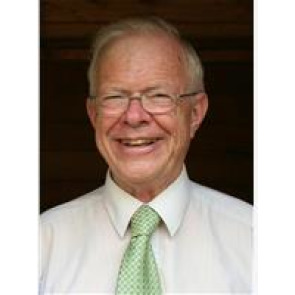
Professor (John) Allan Patmore was an academic geographer linked to the University of Hull with a particular interest in leisure and tourism.

I wasn't able to find out much about his time at the GA from the usual sources, and to begin with not much about the man himself. I still have very little about his time as President.

He was Professor of Geography at the University of Hull, which he arrived at in 1973, with a particular interest in leisure and recreation, a subject he wrote a lot about, including a series of books, articles and papers, including writing about this for GA journals. Regular readers of the blog will know that I did my teacher training at the University of Hull, so have a connection with this place, although we didn't mix much with the actual undergraduate geographers, and the postgrads had a better dining hall. Allan lived in North Ferriby on the outskirts of Hull.

It seems that he was also linked with the University of Liverpool to begin with, before moving to the University of Hull, where he eventually became a Professor.

He was born on the 4th of November 1931, and graduated from the University of Oxford. in 1952 according to a book edited by Robert W Steel.

I found a mention of him in a newsletter published by the Assocation of Jewish Refugees in Great Britain in 1967. He was given some money from the 'Thank-you Britain Fund' to pursue his research on Leisure and Land Use.

I gained further information from a newsletter associated with the LUPTS (showing his lifelong interest in the railways).

Liverpool University Public Transport Society (LUPTS) was formed in 1958 by a group of undergraduate students at the University with a mutual interest in all kinds of transport. Patmore was the first President of the Society http://www.lupts.org.uk/downloads/Patmore_Foreword.pdf

His inaugural Professorial lecture was given in 1974, and called 'People, place and pleasure', and published at the time. He was an expert in tourism and leisure and is referenced in a great many books and PhD theses. Here he is on people's holiday choices:

"The two prime factors in the choice of holiday destination are the friction of distance and the lure of the sun, factors that are equally applicable abroad and at home." (Patmore, 1983)

I wonder what we would have made of the current state of the tourist industry after Covid-19.

He was eventually the Vice Chairman of the Sports Council, now known as Sport England.
In his obituary, he is described as follows

“…a strong religious conviction - he was a Methodist lay preacher - and a moral compass that underscored all that he did. For us, we will remember his interest in and knowledge of railways in all their aspects but, in particular, his friendship and support."

In 1980, his Presidential lecture was entitled "Geography and Relevance" and had some illustrations when it was reproduced in 'Geography'.

Patmore, J. (1980). Geography and Relevance. Geography, 65(4), 265-283. Retrieved August 26, 2020, from http://www.jstor.org/stable/40570301

It also included one of the most well known quotes on the value of fieldwork in it:

Observation is the key to the importance of landscape to the geographer. It links him firmly to reality, it develops his appreciation and poses the questions he must answer to develop understanding. 
Contact with the actual landscape is contact with reality. Confined within classroom walls, geography is an impoverished shadow, like chemistry without experiments or biology without recourse to tangible specimens of plants and animals.
J Allan Patmore, 1980
He went on to say:
A training in geography enhances appreciation not through its intrinsic merit but because it is concerned to go far beyond the simple visual record and experience to consider context and process. The resulting understanding may be partial and incomplete, limited both by the extent of the observer's training and experience and by the inherent problems posed by elements in the landscape itself, but of almost equal worth is the curiosity aroused in the attempt.

Patmore, J. (1980). Geography and Relevance. Geography, 65(4), 265-283. Retrieved August 26, 2020, from http://www.jstor.org/stable/40570301

He was also made a CBE as part of his work with the Sports Council. 

Allan sadly died in 2018, aged 87, he lived in North Ferriby, Hull for some years.

I also found some reference to him at the University of Hull thanks to Justin Woolliscroft.

References
http://worldcat.org/identities/lccn-n50050666/

Notice Gallery for PATMORE
Obituary notice:
https://funeral-notices.co.uk/Yorkshire+%26+the+Humber-East+Riding+of+Yorkshire-Hull/death-notices/notice/PATMORE/4558758

British Geography 1918-1945, Edited by Robert.W Steel - published in 1987.
Chapter 12 was by J A Patmore, where he gave a personal perspective on the period.

He describes Stanley Wooldridge with his "eyebrows bristling" (note to self, get eyebrows sorted before the GA Conference)
Elements from this have appeared in other Presidents' entries from the period.

Yorkshire beyond the Millennium: https://www.yorkpress.co.uk/news/7957703.countys-future-to-be-put-under-spotlight/

A rather nice tribute to Patmore was published in the magazine of the North Yorks Moors Association (NYMA) journal 'Voices of the Moors' in Summer 2018 - written by Tom Chadwick. He was associated with the organisation for some time, and President of the YNMA from 1993 to 2001.

https://www.nyma.org.uk/_webedit/uploaded-files/All%20Files/Voice%20of%20the%20Moors/VOICE-132.pdf

Allan’s connection with the North Yorkshire Moors goes back to his childhood when he lived with his parents in Wetherby and was a regular visitor to the moors and coast.
This brief summary of Allan’s academic career and his involvement in the study of recreation and the countryside is a mere snapshot of his huge contribution to understanding the problems of balancing the human activities of recreation and sport and preserving the beauty of the countryside. Nowhere is this more important than in our National Parks and Areas of Outstanding Natural Beauty.

https://core.ac.uk/download/pdf/2731527.pdf - PhD thesis he supervised

If anyone can provide me with some more information on Professor Patmore that would be appreciated. This is a fairly brief entry compared with other recent ones.

Updated September 2020
Thanks to Brendan Conway for his additional contributions...

Also his work on 'Access to Water'

He attended the 1993 Centenary celebrations and is pictured top right on this image - standing in a grey suit.


Updated November 2020

I am particularly grateful to Derek Spooner, GA President 2000-2001 for the following details on the life of his friend Allan Patmore:

Allan Patmore and I were colleagues for 18 years in the Department of Geography at the University of Hull. 
He was appointed in 1973 as the Department’s second Professor (joining Professor Harry Wilkinson) and moved across from the hugely influential Liverpool Department of Geography. 

He had been at Liverpool since he left Oxford in 1974, after graduating from Pembroke College with a First Class B.A. in 1952, followed by a B.Litt. Allan had a wide range of interests in human geography, including urban development (his B.Litt thesis was a study of Harrogate) and the historical geography of transport (he was infatuated with railways). But his academic career was shaped by the award of a British Academy Thank Offering to Britain Research Fellowship 1967-69. 

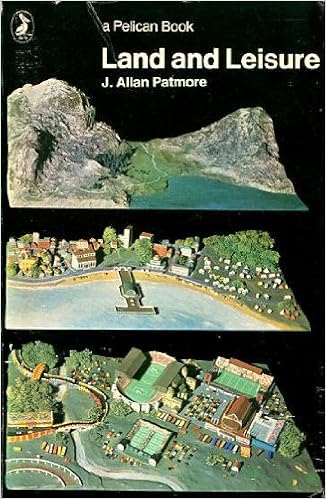
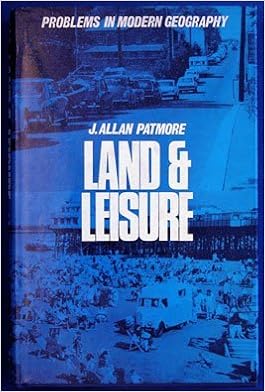
This enabled him to develop his interest in the geography of recreation, and led to the publication by Pelican of Land and Leisure in 1972. This highly successful book linked recreation and environment and kick-started the emerging field of recreational geography. 
A second book, Recreation and Resources followed in the 1980s. 
Twenty years after Land and Leisure his influence was celebrated in the publication Leisure and the Environment : Essays in Honour of Professor J.A.Patmore (including some by former graduate students). Allan was a Yorkshireman, born in Wetherby, and from his childhood had a particular affection for the North York Moors. 
Student field trips with Allan were characterised by a fluent and stimulating commentary on the landscape, environment, and, of course, recreational issues. He seemed to know every inch! It was hardly surprising that from 1977 to 1992 he was to be a member of the North York Moors National Park Committee (appointed by the Secretary of State for the Environment). 
This was just part of an extraordinary record of public service. 
He was a member of the Sports Council from 1978 to 1994 (sitting alongside the likes of Jack Charlton and Seb Coe), with several years as Vice-Chairman. I used to pull his leg about this, pointing out that he was not apparently either a sportsman or a sports fan! He also had close associations with the National Railway Museum at York, with spells on its Advisory Committee and as Chairman of the Museum’s Friends. He was awarded the CBE in 1993 for his services to sport and recreation. At Hull he had two spells as Head of Department, and also a spell as Dean of Social Sciences, and then became a Pro-Vice-Chancellor. 

He was an immaculate Chair of meetings, always well briefed, articulate and courteous. 

As my Head of Department he was always most supportive. As Head of Department he was keen to put the Department on the map, and persuaded his somewhat reluctant colleagues that it was time for Hull to host the Institute Of British Geographers Annual Conference. He pushed for it to be held in 1978 to follow the opening of the Humber Road Bridge (at the time the longest span in the world). Unfortunately the construction of the Bridge did not keep pace with Departmental plans, and it was not open by the time the Conference took place, leading to some interesting logistical gymnastics for the planned programme! 
 When Allan arrived in Hull he assisted greatly in the invigoration of the Hull branch of the GA, in which Vincent Tidswell was also strongly involved. It was through Allan that I became involved in the GA, and my first lecture to a GA Annual Conference came when he was President. 
Allan was also a Methodist lay preacher. He was a teetotaller. His Christian religion was a central part of his life, and I always think of him as a model Christian gentleman. Sadly his last years were clouded by serious health problems, including dementia. He and Barbara moved from North Ferriby by the Humber to Chesterfield to be close to some of his family, and in time he moved into a nursing home, where he died in 2018 at the age of 87.

Derek told me:

"He was a remarkable man, and I don't know how he found time to do all the things he did. 

The influence of the Department of Geography at Liverpool is very interesting. The Liverpool Department under Darby and Steel exported many of their lecturers to other universities as Professors, (and Darby himself moved to Cambridge). We used to refer to it as the Liverpool Mafia!"

Upated July 2022
On his retirement a collection of essays was published, edited by Sue Glyptis. This featured an introduction by another former GA President: Robert Steel.


Some useful additional background there, as well as his links with the Geographical Association:


Margaret Mackintosh RIP

Updated post. Sad news at the end of last week from colleagues who have organised the Charney Conference over the years of the passing of Ma...