Showing posts with label Cobrig. Show all posts

Wednesday, 1 June 2022

GA Presidency Month 9: May 2022

May can be a bit of an anti-climax after the GA Conference which is held in April, but it also marks the start of the final third of the Presidential term, when thoughts turn towards legacy and also transition for the incoming President as well.

I started the final third of my GA Presidency this month. The work continues though for all GA Presidents (and also the Vice and Past President)

I started the month by checking 2nd proofs of an article I had been asked to contribute to one of the GA's Journals: Teaching Geography, which began in 1975 with Patrick Bailey as the Editor. This will be published in the Summer 2022 edition.

The GA's Governance Working Group meets ahead of the GA Governing Body, to set the Agenda and also consider some strategic decisions and thinking. We decided on a date for meetings later in the month and year.

The official images from the GA Conference are generally shared by the end of April, and work goes on to write an illustrated summary of the event for the GA Magazine. These were added to a Flickr album here. See if you can spot yourself if you were there. If you missed the event completely you can purchase a set of recordings from the GA Shop.

The Geographers Gaze project moved on with web pages being built and captions added from the work I completed with Peter Fox.

I had a CPD meeting with Guy Nunnerley - the Head of Geography at Wisbech Grammar School -  regarding my own PDR (Professional Development Review) - an annual or biannual obligation for many teachers - focussing on KS2-3 transition. Thanks to Guy, who I used to work with when he started out in his career - for giving up the time to meet with me and share what he and his department are doing, and their plans for next year. It's important as teachers that we get to see what other schools are doing and I've been very fortunate to visit hundreds of schools over the years in various roles.

Open Day was held on the 7th of May at school - we welcomed visitors and parents who were thinking of joining the school. I then headed home to join the Charney Online Conference.

This was an excellent one-day event with good conversations. I used the presentation here:

Thanks for the kind words. I also learned a lot from the other presenters and have access to their presentations as well.

The following week was a D3 Multiplier Event.

The GI Pedagogy project had been presented at the EuroGeo Conference in Mytiline in Greece the weekend before but I was unable to be there. We heard that the British Council had approved an extension due to COVID preventing a lot of our work, which was good news, so thanks to them. Another ERASMUS project involving my school: Rise the Life was also able to carry out its long delayed residential mobility to Turkey as well.

The ESRI UK User Conference returned to a face-to-face format, and I had permission to make my way down there. Sophie Wilson and Brendan Conway from the GI Pedagogy team were there. I also had the chance to meet up with the ESRI Education folks, Steve Brace from the RGS, Shanique Harris (who is leading a new RGS project called Geography for All) and Francisca Rockey from the Black Geographers group.

I had articles published in three of the GA's journals - I missed out on 'Geography' this time round. Catch them here if you are a subscriber.

Add them to your membership perhaps.

There was also a meeting of the GI Pedagogy project the following week.

Other things that I did this month:

- Completed some consultancy for a VR firm who are building scenes for students to explore with additional educational content. 

- A day working at the Forum library in Norwich 

- Attending part of a meeting of the GA's Post 16 and HE Committee - one of several who support the work of the GA and give up time to meet at weekends and also complete work according to a Work Plan which is then reported to Education Group.

- Discussions with Alastair Owens: the GA Vice President, about the format of the GA's Awards and preparations of papers for Governing Body

- Working on some resources for TeachIt Geography

- Working on a forthcoming book project which I can't mention

- Consultancy with a design agency

- Worked on some materials for the BBC to accompany a film made by De'Graft Mensah, which is part of a series on Empire and Ghana (where his family is from).

COBRIG is the Council of British Geography and has been in existence for many years.

The Council seeks to include representatives of all major geographical organisations in the UK. It invites representatives from the following organisations:
British Science Association (Geography group recorder) (BSA)
Conference of Heads of Geography in British Universities
Council for Curriculum, Examinations and Assessment, Northern Ireland (CCEA)
ESTYN
Geographical Association (GA)
Office of Standards in Education, Children’s Services and Skills, England (OFSTED)
Royal Geographical Society (with the Institute of British Geographers) (RGS with IBG)
Royal Scottish Geographical Society (RSGS)
Scottish Association of Geography Teachers (SAGT)
Welsh Joint Education Committee/Cyd-bwyllgor Addysg Cymru (WJEC / CBAC)

Alan Kinder was unable to attend and asked me to stand in for him. We had several papers which were included in the agenda and I gave an update on activity largely based on the National Research Report.


Image: Alan Parkinson, shared under CC license

The final week brought some more projects:

 - an article for a cartography magazine, which looks good

- some consultancy with a design agency and others

- preparing for the next Governing Body meeting in June by writing some papers

- many personal emails and DMs on social media to share resources and ideas

- discussions around GIS use in the profession

GeogPod is the GA's Podcast, which is hosted by John Lyon. There have been over 50 episodes of the podcast so far, and remarkably I hadn't been asked to do one until now.

Paula Richardson and I were interviewed about the National Fieldwork Week. This runs from the 6th to the 10th of June.

This should be out next week.

The month ended with the start of half term holiday. Just another half term to go before a much needed summer break, when I hope to progress some projects but also decompress as we approach the end of my Presidential term, and support those stepping up to the next stage: Alastair Owens and Denise Freeman.

I was also interviewed on the morning show on BBC Radio Guernsey.


The theme was the National Fieldwork Week.

You can listen again until the end of June. I'm on from 11.16-11.30

The usual Twitter stats at the end of the month. Quite a lot down on the previous month which had all the tweets relating to the GA Conference which were all amplified.


That's three quarters of my Presidential year done.

Saturday, 21 May 2022

COBRIG Meeting

As part of my Presidential journey I was asked to attend a meeting of COBRIG: the Council of British Geography.

This includes members from the following organisations - some educational and others from awarding bodies, inspectorates and government bodies. 

British Science Association (Geography group recorder) (BSA)
Conference of Heads of Geography in British Universities
Council for Curriculum, Examinations and Assessment, Northern Ireland (CCEA)
ESTYN
Geographical Association (GA)
Office of Standards in Education, Children’s Services and Skills, England (OFSTED)
Royal Geographical Society (with the Institute of British Geographers) (RGS with IBG)
Royal Scottish Geographical Society (RSGS)
Scottish Association of Geography Teachers (SAGT)
Welsh Joint Education Committee/Cyd-bwyllgor Addysg Cymru (WJEC / CBAC)

COBRIG has been in existence since 1988.

It was created:

"to advance the interests of geography, and is made up of all the main organisations of geographers and geographical educationists in Britain."

Prominent among its initiatives in the educational context has been the recent COBRIG-inspired Geography into the Twenty-First Century (Rawling and Daugherty, (1996)), which has at its heart the central issue to which this article has been addressed: putting the  geography back into geographical education. This offers the basis of a fruitful agenda as represented, among other things, in Haggett’s delineation of ‘the central and cherished aspects of geographical education: a love of landscape and of field exploration, a fascination with place, a wish to solve the spatial conundrums posed by spatial configurations’ (Haggett, 1996, p. 17); in Johnston’s advocacy of a refreshed, dynamic, and distinctive place geography (pp. 73-4); and in Jackson’s concern for developing sensitivity to place connections at a variety of scales (p. 91); or, as Allen and Massey have put it: 

‘We live local versions of the world and in so doing we have to locate ourselves within a wider global context. We only understand the changes taking place in our own backyard when we begin to understand how changes taking place elsewhere affect our world’ (1995, p. 1)

Source: https://www.open.edu/openlearn/pluginfile.php/631169/mod_resource/content/1/geog_sk6_06t_5.pdf 

Neil Simmonds and Eleanor Rawling were originally involved from the GA's perspective, along with Richard Daugherty.

COBRIG previously ran seminars for geographers as well through the 1990s in particular.

This meeting was held at the Royal Geographical Society - the first time I'd been there for about three years and it was good to be back in such a historic location.

It was lovely to meet some old friends - particularly Erica Caldwell who was representing SAGT / RSGS, and also to make new acquaintances.


Image: Alan Parkinson, shared under CC license.

Thursday, 29 April 2021

2008: Margaret Roberts, MBE

Updated October 2023

Well, what is there to say about the legend who is teacher educator
Margaret Roberts?

In her time at Sheffield University, she trained many future teachers and I have worked with quite of those, including my current Vice Principal and some other geography legends that I engage with regularly.

The GA has published Margaret's books on geographical enquiry over the years and they have always been in the top sellers of the GA's catalogue. 

In January 2021 Margaret was awarded an MBE in the New Years' Honours List, and this resulted in lots of messages and appreciation of her work over the decades from people who had valued her thoughtful contributions.

At the GTE Conference in January 2021 there was a celebration of her award which I was pleased to be present at.

Emma Rawlings Smith, another of Margaret's students talked about how important Margaret was in her own life.

This tweet by Bob Digby has a number of others as part of the thread that follows:
To hear Margaret at work, you can go onto YouTube, and hear her debating with Michael Young about Powerful Knowledge, for example and her own perspective on his ideas. You will find other elements of Margaret's work online.

Michael spoke first, and Margaret responded - the IoE recorded the session. I was fortunate enough to be in the audience at this event, and remember it well.


As with other former Presidents, Margaret was kind enough to send me some responses to a series of questions that I asked her, and that forms the next part of this entry:

Of her education, Margaret told me: 
"I was born in Cardiff. I went to Lansdowne Road Primary School, Cardiff and Cardiff High School for Girls before transferring to Colston’s Girls’ School, Bristol." This was the school where, shortly after, former President (1975) Sheila Jones began teaching. Sheila was the first female GA President to be teaching when she became President.

Margaret told me:

"My most vivid memories of school were school trips. I went to Windsor Castle when I was 9, my first visit to England, and to Bordeaux and Hanover, to stay with families on school exchanges, when I was 14 and 17. My parents never had a car or went abroad and we never went far, but I longed to travel. It was my interest in places and people that triggered my interest in geography. 

Unlike other past presidents, I was not inspired by my geography teachers. It was my A level biology teacher whose lessons I enjoyed most; she shared her curiosity and sense of wonder in the subject and we did a lot of practical work. I would have studied biology at university but had stopped studying chemistry at the age of 14. I am perhaps an accidental geographer!  In a gap between school and university I worked for three months in an ice-cream parlour in Hanover washing up dishes. Other holiday jobs included working in a guesthouse in Cornwall, a bookshop in Bristol and cleaning public baths in Bristol.

I went to Cambridge University and was a student at New Hall, then newly established (now Murray Edwards College). It had no buildings and in our first year we lived in Darwin’s old house, now Darwin College. There were only sixteen students in each year and the life-long friends I made were studying different subjects: English; natural sciences; history; maths and economics, a broadening experience. As New Hall had no geography tutors, my weekly supervisions were in other colleges: Newnham, Trinity and in my final year, with Gus Caesar in St Catharine’s College. 

Gus has his own entry on the blog, and was mentioned by a number of other St. Catharine's alumni. This places Margaret in a special group of former GA Presidents.

When Gus Caesar died, Ashley Kent and Michael Bradford (who also feature on this blog of course) kindly contacted Margaret so that she could go to his memorial service with them in Cambridge.

Margaret told me that her time at Cambridge studying geography was exciting:

"...with access to the latest research and thinking; Richard Chorley and Peter Haggett were among the lecturers.  I was struck by how cross-curricular geography was, with most lecturers referring to other disciplines: history, geology, climatology, chemistry, physics and economics. What made the biggest impact on me, however, was getting a geography department travel award to do my undergraduate dissertation in Ghana, studying development in a rural area east of Accra. The time I spent getting there on a French boat where my companions were African students from Senegal and Guinea and the time interviewing subsistence farmers, together with short stays in a school and training colleges in other parts of Ghana, transformed my understanding of development and colonialism. I wanted to get back to Africa and did a PCGE so that I could travel. I never did get to work in Africa but married a South African and visited South Africa many times."

Margaret completed her PGCE at the London Institute of Education and, at her request, did her  teaching practice at Kidbrooke comprehensive school whose first headteacher Mary Green had been head at Colston’s Girls’ School. 

Career

  • 1962-1968 Minchenden School, Southgate, London, where I became coordinator of Sixth Form General Studies
  • 1968-1970 Team member of the Nuffield Foundation Resources for Learning Project  
  • 1970-1976 Countesthorpe Upper School and Community College, Leicestershire (part-time): responsibility for A level geography.
  • 1980-1981 City School, Sheffield (part-time)
  • 1982-2006 University of Sheffield, Lecturer, PGCE geography tutor (part-time until 1987)

Margaret told me of her own teaching experience (remember that not every GA President has this):

"At Minchenden School the head of English, Douglas Barnes, took an interest my teaching and, because of interest in Language across the curriculum, got me involved in conferences of the London Association for the Teaching of English (LATE). Douglas encouraged my use of exploratory talk and writing in the classroom. I devised and taught Sixth Form General Studies courses on South Africa, the Press and Current Affairs.  

The Nuffield Foundation Resources for Learning Project was set up to promote more active learning in the classroom, where students could work more independently at their own pace using resources, with guidance. I was responsible for humanities, supported by Michael Armstrong, Deputy Project Director. The theme I was given was ‘the USA’ and I produced resources and guidelines for use by history, geography and RE teachers in comprehensive schools in London and Oxfordshire on: The First Americans; Black America (including extracts from black writers) and A Nation of Immigrants (white America).

Countesthorpe College, Leicestershire, which opened in 1970, was the vision of Tim McMullen, a former Director of the Resources for Learning Project. Four members of the Resources for Learning team got teaching posts there, keen to put into practice what the project had advocated. There was almost no whole class teaching; students learnt mainly through resource-based learning and investigative project work, often done in small groups. Students received a lot of individual attention. It was an exciting school intellectually for both students and teachers.

Margaret took a career break after the birth of her daughter, but spent her time marking CSE and O Level geography papers and did a ceramics diploma evening course (even considering becoming a potter). She also actually retrained as a Maths teacher (after doing A Level maths) as there was a glut of teachers and she wanted to get back into teaching part-time. She told me:

"I must be the only PGCE tutor ever to have done teaching practice (teaching bottom set maths students in Sheffield comprehensive schools) in the year before starting the job."

She may well be right there...

Margaret spent many years at Sheffield University, also home to the GA.

"I worked as PGCE geography tutor and eventually as Director of PGCE, at Sheffield University from 1982 (part time initially) until my retirement in 2006. My course, influenced by the language across the curriculum movement, included pre-Teaching Practice visits to schools to interview individual students about place, to teach planned lessons to small groups and to carry out a simulated public meeting role play, all emphasising the value of listening and talk. There was a lot of discussion and group work in university-based sessions. My ideas on enquiry-based learning, developed during my experiences with the Resources for Learning Project and at Countesthorpe College, were further influenced by the Schools Council geography projects which were used widely in the partner schools. (see separate blog post on the Schools Council project)

My research, using questionnaire surveys and interviews, focused on the geography national curriculum and learning through enquiry.

Margaret's personal geographical education contained at the same time, she told me:

"In my first three jobs, I had been incredibly fortunate to find myself, by chance, working with such brilliant, stimulating teachers, most notably Douglas Barnes, Michael Armstrong and Pat D’Arcy, each of whom developed my educational thinking. But none of these was a geographer. 

So, the Geographical Association was particularly important for me as it gave me the opportunity to meet inspiring geography educators and to become part of the geography education community. I initially felt overawed at meeting, at GA Teacher education conferences, well known authors such as Bill Marsden, Rex Walford and Frances Slater and people involved in Schools Council Projects: Eleanor Rawling, Ashley Kent and Michael Naish. But I found them approachable, supportive and encouraging. I gradually became more involved with the GA and over the years have been on several committees, including Council, Publications, Teacher Education Working Group and a Research group. The GA gave me opportunities to publish chapters in its secondary handbooks, articles in its journals and ‘Learning through Enquiry’ which was based on my PGCE course. So, it was easy to choose my Presidential conference theme ‘Investigating Geography’.


She told me of her own Presidential year:

"I was fortunate during my Presidential year to have the support of David Lambert, then Chief Executive of the GA. He decided to launch ‘a different view’, the GA's impressive Manifesto for Geography, in my conference slot, but having timed my lecture carefully I was worried about how much of my time he would use up! I was delighted that this conference included, for the first time, a slot for research presentations and a special session for PGCE students, an earlier initiative of Michael Bradford’s that I had strongly supported. I think it is important for new teachers, whatever other networks they can now join, to become members of the professional community of geography teachers, the Geographical Association. My PGCE students were expected to do so and encouraged to go to conference. It has given me enormous pleasure to see former students, including Mark Higginbottom, Richard Allaway, Matt Podbury and Emma-Rawlings Smith, giving presentations at GA conferences."


Since my retirement in 2006, in addition to my year as GA President (2008-2009), I have continued to be involved with the GA and with geographical education generally. I coordinated the GA’s Think Piece project; I edited 'Teaching Geography' journal for a while and went on well-organised GA Study Tours to China, South Africa, Mexico and Poland. I chaired COBRIG (Council for British Geography) for six years and organised its small-scale seminars in Sheffield, Perth and Cardiff. I have contributed to CPD sessions for Teach First, Prince's Trust, Eduqas and a MAT. I was on the IGU Commission for Geographical Education British Committee for many years and contributed to its conferences in Helsinki, South Korea, Brisbane, Melbourne, Stellenbosch, Singapore and Lisbon. I have been a member of the Geography Education Research Collective (GERECO).  I continue to write occasional articles and chapters and to contribute to conferences.


My GA publications, notably, ‘Learning through Enquiry’, led to unimagined further opportunities. I was invited to run courses for teachers on ‘Inquiry’ in Singapore in 2011, the Netherlands in 2014 and Hong Kong in 2015. So, although I never did teach abroad, I did get to travel widely in the end. I developed my second book, 'Geography through Enquiry' (now translated into Korean), from the ten courses I ran in Singapore. My unplanned and surprising career would not have developed in the way it has without my involvement in the Geographical Association. Through the GA I have met and shared ideas with so many inspirational people and feel very grateful to have received so much support and encouragement from the GA community."


You need to get yourself a copy of Margaret's book if you haven't already. One belongs in every departmental library.

"What makes a Geography lesson good?" is one of the most useful pieces of advice she has shared - free download from the GA.
Download as a PDF

For more on Margaret's influence, you should listen to her talking to John Lyon for the second of the GA's GeogPod episodes. She talks about her work with Singapore educators, and also a recent contribution to a book on technology and her career as a whole.


Margaret has contributed numerous articles to GA journals as well as her other writing work. 

I also have a memory of chatting to her and the late Doreen Massey while at the University of Derby about a T-shirt I was wearing saying "I am here" and where exactly I may have been...

Doreen, who has her own post as a former Honorary Vice President of the GA later posed in a hoodie for a recreation of one of our 'Mission:Explore' missions: 'Put OAPs in the Hood'.


Images copyright: Bryan Ledgard / Geographical Association - used with permission

When I'm teaching, to this day, I often think to myself of any lesson "What would Margaret say?"

Another former GA President Derek Spooner also provided me with a great story about he and Margaret...

"Another less serious memory: when I was Editor of Geography I used to attend Publications and Communications Committee at HQ at Fulwood Road. These meetings were held on Saturdays and could be rather long and tedious. Margaret Roberts (another President in due course) was also on the Committee. She was a Sheffield Wednesday fan, and the two of us skived off after lunch from one particularly boring meeting to go to Hillsborough to watch Everton v Sheffield Wednesday. Wednesday won 3-1 and the Everton goalie Neville Southall was sent off. Chris Waddle was playing (brilliantly) for Wednesday. The only time I've been to Hillsborough (though I played cricket several times down the road at Bramall Lane!). I remember a few eyebrows were raised when we left the meeting......"

Margaret told me of her MBE award:

It has been quite humbling receiving such messages from people who themselves have done so much to promote geographical education. I feel particularly fortunate to have worked with people in my first few jobs who encouraged me so much and also to have had the support of the Geographical Association and the opportunities it has given me at conferences and in publications. I consider myself a democrat and have always considered the students in the classrooms I have observed. That is what it was about for me - their engagement and involvement - otherwise geographical knowledge was just inert.

I've had the pleasure of spending time chatting to Margaret many times over the years. I also remember a terrifying occasion in a hotel in York when I was leading a session for the GA's 'Living Geography' events and my session on 'Geographical Enquiry' had Margaret in the audience - she was very kind about it. She also asked to check a chapter of a book I was editing to make sure what we were saying was accurate and included real people and not 'talking heads' invented by the authors. Realism and authenticity is vital in textbooks.

References
'Learning through Enquiry' and 'Geography through Enquiry' -  Margaret Roberts - published by the Geographical Association.

Read this PDF : OU Enquiry resource

Margaret contributed a chapter to a recent book edited by Nicola Walshe and Grace Healy on Geography Education in the Digital World. She also mentions that in the GA Podcast with John Lyon.

Any further memories of Margaret would be very welcome. 

If you were trained by Margaret please say hello in a comment or let me have any further memories of your time on the course.

Updated August 2023

Make sure you sign up to hear about the new edition of Margaret's classic book.

The second edition of the popular Geographical Association title Geography Through Enquiry: Approaches to teaching and learning in the secondary school will be published in autumn 2023.

This updated edition draws on Margaret Roberts’ in-depth experience and knowledge of geographical education, with input from a wide range of practising teachers and educators from around the world.

It takes into account the changes that have taken place since the first edition, both educationally and in the wider context:
  • The many new books, articles and national and international projects focused on geographical education.
  • In England, the changes to the inspection framework and standards and requirements for trainee and early career teachers.
  • The sharper focus on issues related to equity, diversity and inclusion and on the continuing impact of the legacy of empire on both the curriculum and the world that geography studies.
  • The increasingly urgent challenges related to climate change and sustainability.
  • The rapid development of digital technologies and the impact of this on the world studied by geographers and ways in which they study it.

NOW AVAILABLE FOR ORDERING.

Saturday, 16 January 2021

1996: W(illiam) Ashley Kent

Updated August 2023

Ashley Kent had a long career as an academic geographer.
As with quite a few other former GA Presidents, Ashley Kent worked at the Institute of Education for many years.

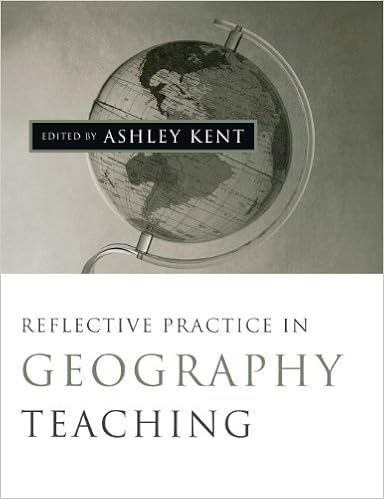
I own a copy of the book whose cover is shown below, which has proved useful in the past, and has several chapters written by a number of other former Presidents as well. Like many of his books, it has run to several editions.

His PhD thesis was on the adoption of CAL (computer assisted learning) and acts as a useful summary of the development of IT in Geography classrooms - this connects with the work of another President: Peter Fox, (and I will discuss his role at the appropriate time). See the link at the end of the post to download a copy if you are interested.

He also wrote an influential book with Michael Bradford (another former President, who sadly died in 2019) called just 'Bradford and Kent' by the many teachers who used it. I mentioned that book in a recent blog post.

He was also part of the authoring team of the Oxford Geography Project, which I used back in the day when I first started teaching. Copies of this can still be obtained second hand.

Ashley proved elusive to track down for some further information for some time, from the start of my blog writing. 

I was able to swap e-mails with Ashley earlier this year, and he provided me with further information, which is now included below:

I was born in 1945. 
I attended St. Catharine's college, Cambridge - as did at least three other GA Presidents including Derek Spooner. 
My teaching career began as a student teacher at St Dunstan’s College, Catford where Brian Fitzgerald was head of department and Neville Grenyer a member of staff…both became HMI’s!

I then taught at Haberdashers’ Aske’s School, Elstree where my colleagues included John Rolfe, Neville Grenyer, Rosie Grenyer and Clive Rowe.

I was then head of department at John Mason School, Abingdon with Eleanor Rawling as a close colleague.
What a powerful department that must have been!

Eleanor and I then moved to the Geography 16-19 Project at the Institute of Education with Michael Naish.
I then became a lecturer and eventually a professor and pro-Director at the Institute of Education.

My major textbooks were the Oxford Geography Project written by the Haberdashers’ team for years 7-9; and two textbooks written with Michael Bradford: Human Geography: Theories and their applications (1977) - and Understanding Human Geography: People and their changing environments (1993). 
Both were aimed at A level and first year university students. 
All published by Oxford University Press…and fortunately sold quite a few copies!?

I joined the GA in 1969 so have been a member for over 50 years!

Further details from his CV:
He has taught in a variety of secondary schools; the University of Wisconsin-Madison; the UK’s
Open University and was Associate Director of the Geography 16-19 Project a nationally funded
curriculum development project.
He has longstanding professional and research interests in: curriculum development and evaluation;
innovation and change (the focus of his PhD work); teaching strategies including fieldwork; the
marketing and image of geography; the school/HE interface; information technology, including
remote sensing; developments in human geography; 16-19 geography; initial teacher education;
stereotyping and bias; and environmental hazards.
He has directed a number of research and development projects including: Project HIT (Humanities
and Information Technology); Remote Sensing in the Geography National Curriculum Project; Centre
for ‘A’ level Curriculum Support; Eurogame Project, a large scale European funded multi media
development; Geography 16-19; Learning Geography with Computers; YoungNet; DUNES; and
pillar leader of the HERODOT Project.

On his involvement with the GA, Ashley sent me this resumé:

He has been fully involved with the Geographical Association (GA) since 1969. He was on GA
Council for 15 years and has been its President. He was a member of COBRIG (Council for British
Geography) and has been its chairman. Over the years, he has been engaged in a number of
geography education research projects, both in the UK and for the International Geographical
Education (IGU), Geography Education Commission. He has presented papers at IGU conferences
across the world and was both a full member of the IGU Geography Education Commission and a
former chair of the British Sub-Committee. He has published widely in geography education and
education both for professional and academic audiences. This has included a number of successful
school and university textbooks.
The common thread in his career has been an involvement and passion for education at a variety of
levels and specifically curriculum development and teacher education.

I tracked down his PhD Thesis from 1996, which was titled:
"Process and Pattern of a Curriculum Innovation".

The innovation in question was introduced at the start:
The innovation in question is the use made by secondary school geography departments of computer assisted learning.
Ashley mentioned 2 key documents that sum up his approach to Geography

‘Geography’ October 1997 ‘Challenging Geography’----my Presidential Lecture presented at the Institute of Education

KENT, ASHLEY. “Challenging Geography: A Personal View.” Geography, vol. 82, no. 4, 1997, pp. 293–303. JSTOR, www.jstor.org/stable/40572948. Accessed 15 Jan. 2021. 

James Fairgrieve featured in the Presidential Address, where Ashley outlined his life and also the strong connections between the IoE and the GA. It is well worth reading to get an idea for the links and the changing nature of Geography. 

Ashley provides additional detail on Fairgrieve's life.

His inaugural professorial lecture in 2004 entitled ‘Windows on Geographical Education’….published by the University of London Institute of Education…2004

He was the tutor on the IoE's MA in Geography Education for many years. This went online from 2001, having been offered at UCL since the 1960s
He contributed to an IoE publication on retired academics in 2009, and was described as follows:

Ashley Kent retired as Professor of Geography Education at the Institute of Education, University of London - the culmination of a lifetime as a geography teacher.

“Exciting demanding, relevant and worthwhile – geography prepares pupils to critically understand and fully participate in the changing worlds in which they live” — Ashley Kent

In 2003, Chris Kington asked a number of former Presidents what had sparked their passion for geography. He lent me the letters and Ashley replied to Chris.
He talked about a "gradual realisation" that geography was for him. His geography teacher at school was described as "rigorous - a bit terrifying and gave us lots of autonomy...". He also remembers taking part in the 2nd Land Use survey, at Pilling Marshes and realising that it was all 'rough grazing'. He remembered his PGCE year and the influence of Walford and Fitgzerald et al. He also remembered his first year teaching at Haberdasher's Aske.
Many thanks to Chris Kington for the loan of the letters.
Ashley told me about his connections with Hull University and Derek Spooner, with whom he led celebrations of the life of Michael Bradford (far more on Mike to come as we get closer to the present day)
He also had memories of my own PGCE tutor at Hull: Vincent Tidswell. He told me:
Vincent I knew through his work and the ‘new’ geography ....his Pattern and Process in Human Geography was followed by Keith Hilton’s Process and Pattern in Physical Geography. 
Keith was a colleague of mine at the Institute of Education....and knew Vincent through working at Hereford College of Education. 
Vincent also had links with Brian Fitzgerald who I met at St Dunstans College. 
That was for me as a keen young man/geographer....a really exciting time...we felt very much at the frontier of the ‘new’ geography, both new in terms of content and pedagogy. 
Oxford Geography Project was really at the leading edge....as were the Schools Council Projects....GYSL and 14-18 ...and the one I was very much part of...the 16-19 Project. 

People like Brian, Rex et al were at the forefront....it was great fun being part of it! 
The first book Mike and I wrote was a direct effort to help teachers to keep up to date with the ‘new’ geography then in several school and university syllabuses. 
Of course Mike and I were helped by being a part of Cambridge and US developments....we went to Madison Wisconsin after Cambridge...where a great deal of that stuff was going on.

Exciting times, and Vincent was very much part of that. I like to think he passed on a little of that love for exciting new approaches and pedagogies to his trainees, of which I am proud to have been one. I remember using GYSL in my first job in January 1988 at John Flamsteed School in Denby, Derbyshire.

Ashley also shared some memories of the next important phase in the GA's History: the move from Fulwood Road to Solly Street, where it has its HQ to this day. Ashley is amongst the Presidents and former staff who were involved in locating the GA's new premises. That story will be told next.

Image from GA News.

Update January 2021

Some memories of his Presidential conference from Ashley Kent.
In my Presidential Year we had the Conference at the Institute on Bedford Way, which I thought was appropriate given the long-standing links between the IOE and the GA. The Presidential Dinner was held at the Imperial Hotel on Russell Square. My guest of honour was the Crown Princess of Thailand: a much revered member of their royal family: very environmentally aware and active. He had been suggested by Professor Philip Scott: an extraordinary and alternative academic from SOAS. 
The assembled diners were kept waiting by the Princess, who had been having tea with Prince Charles at Highgrove and then visiting SOAS.
We were kept waiting by the guest of honour for quite a while...so much so I suggested more booze was supplied to all the waiting guests.
On her eventual entrance/arrival the assembled throng, on the advice we were given, all stood up and did the slow handclap, which apparently in Thailand is a mark of real respect.
She was accompanied by two armed generals and sat next to me at the top table and the generals became anxious ( I was told by folk sitting with them at one of the tables) when I engaged in a lively/animated story involving props, including a scroll given to her in memory of her visit.
It was all right on the night! 

Is there anyone who was there and has their own memories of this event?

References


KENT, ASHLEY. “Innovation, Change and Leadership in Geography Departments.” Geography, vol. 91, no. 2, 2006, pp. 117–125. JSTOR, www.jstor.org/stable/41555403. Accessed 15 Jan. 2021.

Presidential Lecture, exploring the life of James Fairgrieve
KENT, ASHLEY. “Challenging Geography: A Personal View.” Geography, vol. 82, no. 4, 1997, pp. 293–303. JSTOR, www.jstor.org/stable/40572948. Accessed 15 Jan. 2021.

I would be pleased to receive any further details of Ashley Kent's time as GA President.

Updated August 2023

A link with the forthcoming GA President (as I write this) for 2023-24: Denise Freeman.

Tuesday, 8 December 2020

COBRIG

 COBRIG is the Council of British Geography.  The GA is one of the affiliated organisations.

COBRIG is the organisation which represents all those bodies concerned with geography and geographical education in England, Wales and Scotland.  Northern Ireland is loosely affiliated to COBRIG and efforts are being made to strengthen links.  

Objectives currently are:

  • To enable member organisations to exchange information, ideas and views on matters, policies and practices related to geographical education in general, academic geography and research across the four regions and to identify common concerns and issues therein.
  • To act as a spokesperson and a point of reference for the subject in order to be able to represent the views of the geographical community on major issues affecting the status of the subject in the four regions and its constituent organisations and members matters of public interest and policy on which the views of geographers ought to be known
  • To follow a flexible and wide-ranging brief embracing the following general areas:
  1. policies and proposals affecting geography at all levels of education from primary and early years to higher education, including research
  2. provision of resources for geography in education at all levels including research matters of scientific and public concern both national and international to which geographers ought to contribute
  3. the raising of public awareness of geography through the media and through the COBRIG website and websites of member organisations of the role that geography can and does play in the day to day matters of the four regions

There are currently 8 member organisations, including the GA and the RGS-IBG. COBRIG provides a forum for discussion and exchange between countries, organisations and sectors of education.  

It represents the interests of geography at national and international levels and identifies issues which need concerted action.  The Seminars were held biennially during the 90s and early 2000s as a forum for discussion and exchange, particularly between schools and higher education.  

Neil Simmonds and Eleanor Rawling were the GA contacts for some time, the latter being a former President of the GA, who established the CoBRIG Seminars.

One COBRIG seminar in 1994 led to the publication of a book co-authored by Eleanor Rawling and Richard Daugherty.

References

(1998) Book Reviews, International Research in Geographical and Environmental Education, 7:3, 265-270, DOI: 10.1080/10382049808667584

Thursday, 12 November 2020

1987: Dr. Graham Humphrys

Updated February 2021 with a major update from Graham himself...

Dr. Graham Humphrys was the Head of the Geography department and previously sub-Dean of the Faculty of Economic and Social studies at the University of Swansea.

He served as the Chair of the GA's Publications and Communications Committee during the late 1970s and into the 1980s.

I was unable to find a decent image of Graham, close-up. When I first started the project I did come across a small image on a Flickr account by Tehmina Goskar.

She sent me the image here and told me:
It's not that high res but in the photo he is talking about the Lower Swansea Valley Project which was one of the first post-industrial reclamation projects. 
The symposium took place in November 2010 at the National Waterfront Museum, Swansea. All the best with the project.
Tehmina

From the GA Annual Report of 1983:
Dr. Graham Humphrys completed six years as Chairman of the Publications and Communications Standing Committee. Under his chairmanship this committee has been responsible for the recent surge in GA publications and the organisation of successful national and regional conferences.

In this capacity, he wrote reviews of quite a few publications which were published in GA journals - have been looking at journals from this period to try to get some images.
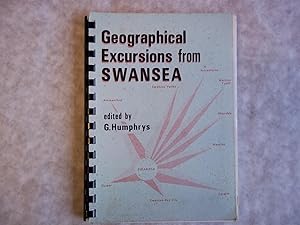
Geographical Excursions from Swansea.: Humphrys. G.He also edited and wrote or co-wrote a series of books related to his geographical work, which included economic and industrial geography and heritage a subject about which he was obviously passionate according to this account of an event in the year 2000.

He was an expert on Swansea and Cardiff's industrial heritage and the restoration of old industrial landscapes and gave regular talks on this theme.
His fieldwork excursions publications series ran to several editions and were a good seller as well apparently.
Graham contributed an article on Swansea Bay City to the 'Geographical' magazine in 1971.

A special edition of 'Teaching Geography' in 1986 was all about economic and industrial geography, and Humphrys contributed to this, as well as other journal articles on this theme as part of his Presidential year.

He is also remembered here, from a former student who remembers his lectures on industrial change and the development of the S Wales area as a city region.

Graham's GA Presidential Address was on a theme which has gained recent currency: 'Changing Places'.


The idea of Changing Places is now more significant than it was back then.
In his Address, Graham explored the factors that influence places.

A former student, David Herbert reflected on that time and his influence here:

I was away from the Department of Geography for six years during which time I completed a PhD at Birmingham University and had my first academic appointment at Keele University. During the early summer of 1965 a post of Lecturer in Human Geography was advertised at Swansea and it was suggested that I should apply. This I did successfully and after a semester at Toronto University I returned to Swansea in the Autumn of 1965. 
My former teachers were still there but there had been new arrivals, most notably Graham Humphrys, the first South Wales-based staff member. His interests were in Economic Geography focused on South Wales and often his concept of the Swansea Bay City.

At Swansea University, Graham was following on from the legacy of W. G. V. Balchin.

In 2015, a journal article said:

Graham Humphrys has degrees from the universities of Bristol, McGill and Swansea, and is a former Senior Lecturer in Geography and former Dean of the Faculty of Social Sciences at Swansea University. His research interests focus on economic geography, the environment and geographical education. He is currently acting chairman of the Canadian Studies in Wales Group.

Updated February 2021

Thanks to Richard Daugherty for putting me in touch with Graham, who provided the following significant personal details to add to the post:

I was born in 1934 in the town of Maesteg in the middle of the South Wales Coalfield. 
I went to the local Grammar School and then in 1953 I won an entrance scholarship to Bristol University to study for an Honours Degree in Geography. In my second year Bill Birch, one of my lecturers, persuaded me to take out a student membership of the Geographical Association.

I graduated in 1956 and then spent a year working at the McGill Subarctic Research Laboratory in Schefferville, northern Quebec to start working towards a Masters degree. The next two years I was at McGill University in Montreal as a Teaching Assistant and finishing my M.A.. As part of this I spent the summer of 1958 in the West Indies looking into the alumina industry in Jamaica, Trinidad and what was then British Guiana. I also visited the research centre that McGill had in Barbados. I gained my MA in 1959 and was then appointed as an Assistant Lecturer in Geography at Edinburgh University for the academic year 1959-60.

In 1960 I was appointed as an Assistant Lecturer in Geography at Swansea University. 
I gained my Ph.D. in 1967, and then stayed until I retired as a Senior Lecturer in 1997. 
My Head of Department at Swansea was Professor W.G.V. Balchin who was a keen member of the GA and very active in the Swansea GA Branch. (He served on the GA Council from 1949 until 1976, was a Trustee 1955-76, and President in 1971.) 
I re-joined the GA as a full member when I came to Swansea, and was active in the local Branch until the early 1990s. I was a Committee Member throughout that time, and at various times I was Chairman and Secretary of the Branch. During my career I gave lectures at other Branches whenever I was invited. I also contributed to various GA publications. In the early 1970s I was one of the leaders on two field excursions to North America for Geography Teachers organised under the GA banner. 
The first was Trans Canada in 1971 and the second down the western Cordillera in 1973. (Bill Balchin and Alice Coleman were the main organisers for both and I think they may have been based in the Isle of Thanet GA Branch). 

I was elected as an ordinary member of the GA Council in 1976. The GA at Headquarters was reorganising at the time and in 1977, much to my surprise, I was invited to Chair the newly formed Publications and Communications Committee. (The Honorary GA Secretary for that committee was Michael Williams).
At the time he was in the Education Department at Manchester University but subsequently he was appointed to a Chair in Education in Swansea where he still lives. We met regularly until the lockdown.

The Publications Committee was worked hard. The GA urgently needed a publications policy which it did not have previously, and this had financial implications. For example, there were shelves stacked with unsold publications which, if my memory serves me rightly, went back to pre-war days. Until then decisions on occasional publications were very ad hoc which had resulted in further accumulation of unsold stock. I also remember that there were decisions to be made to get Primary Geography published.

Fortunately the Headquarters staff provided tremendous support. They were very professional and well organised and got through an enormous amount of work. I stayed as Chairman until 1983 but remained on the Council until my year as President : 1987-8. 
During my year as President it was the GA’s turn to Chair the joint meetings of representatives of British Geography organisations. At the time the three main national organisations were the RGS, the IBG and the GA, but there were others on the committee representing the Heads of University Geography Departments, The Royal Society, The Royal Scottish Geographical Society and so on. By the end of 1988 it had been decided to reform the Committee into The Council of British Geography which I believe still meets. 
My involvement with the GA reduced after my year as President. At the Swansea level, restructuring of local schools had reduced the number of geography school teachers involved and it was difficult to maintain a programme. By this time there was little support for the local GA from the staff of the University Geography Department. I was away from Swansea for a couple of semesters in the 1990s, at Rhodes University in South Africa and at a University in Hokkaido and the Swansea GA Branch faded away, which was very sad. To end on a more cheerful note. Swansea did make a useful contribution to the GA at the local and national level in the second half of the twentieth century, with three national Presidents - Bill Balchin, Richard Daugherty and me, and an Honorary Secretary – Michael Williams, and three of us are still here. 
All happy memories. 
Good luck with your year as President.

Thanks so much to Graham for sending that through.

References

HUMPHRYS, GRAHAM. “Japanese Industry at Home.” Geography, vol. 80, no. 1, 1995, pp. 15–22. JSTOR, www.jstor.org/stable/40572605.

https://ucl.scienceopen.com/hosted-document?doi=10.14324/111.444.ljcs.2015v30.002 - from 2015

Humphrys, Graham. “Changing Places.” Geography, vol. 73, no. 4, 1988, pp. 298–307. JSTOR, www.jstor.org/stable/40571462.
https://www.iwa.wales/click/2010/11/making-our-past-work-for-the-present/

https://www.researchgate.net/publication/240442920_The_economic_development_of_the_British_coal_industry_From_industrial_revolution_to_the_present_day

Humphrys, Graham. “Recent Trends in Industrial Geography.” Teaching Geography, vol. 11, no. 3, 1986, pp. 120–121. JSTOR, www.jstor.org/stable/23751638

Humphrys, G. (1972) South Wales: An Industrial Geography, David and Charles, Newton Abbot.

https://collections.swansea.ac.uk/s/swansea-2020/page/on-our-doorstep - memories by David Herbert, who was associated with the University of Swansea for over 40 years.


Updated December 2020

In 2003, Chris Kington asked a number of former Presidents what had sparked their interest in geography. He lent me the letters and here is the response that Graham sent. At the time he was living in Swansea.

He talked about the place in which he was born and grew up in: Maesteg, and how he came to appreciate the importance of the physical geography of this place on the people who lived there, and the rise of the coal industry He didn't appreciate this until he got into the 6th form of the local Grammar School. 
"What made this all click academically was good teaching. I had two good geography teachers, a man who taught physical geography and a woman who taught human geography...."

GA Publications 
The regional distribution of Growth Industries in Britain, Geography, V 39, 1964. 
Industrial change; Lessons from South Wales, Geography, V 61, 1976
What University Geographers expect from their new students, Teaching Geography, V 3, 1977
Patterns on the map: Land utilisation survey maps as resources for teaching and learning, (with Alice Coleman, H. A. Sandford and J Bale), Geographical Association, Sheffield, 1982. 
Trends in Textiles, Geography, V. 69 (2), pp. 150 ‑ 153, 1984. Recent trends in Industrial Geography, Teaching Geography, V. 11, No. 3, 120 ‑ 121, 1986

Thanks to Chris Kington for the loan of the letters.

As always. further memories of Graham Humphrys would be welcome.

Updated August 2025

Graham also received the RGS Gill Memorial award in 1994.

Tuesday, 6 October 2020

1982: Professor Richard (Dick) Lawton

Updated August 2023

Richard (Dick) Lawton was an academic geographer who was active in all spheres of the subject during a long career, and involved in moves to improve the standard of teaching in universities.

He was born in County Durham, but he was linked with the University of Liverpool for his entire career. He was very much influenced by the teaching of a previous GA President,
Professor Percy Maude Roxby.

He was described by Bill Chambers (President in 2004) as

"a tough Yorkshireman and utterly committed to geography and to the GA especially on Merseyside."

His 1972 inaugural lecture, ‘An age of great cities’ (itself a classic Lawton tour-de-force apparently) and his 1987 Presidential Address to the Institute of British Geographers, ‘Peopling the past’ were said to have encapsulated his academic achievement.

He had a distinguished wartime career, as did many GA Presidents during this time.
His undergraduate studies were broken by three years (1943–46) as a sub‐lieutenant aboard the corvette HMS Primrose hunting U‐boats on the North Atlantic - an experience which I am sure informed his geography in many different ways.

His duties on board the ship included those of librarian, in charge of a set of the top‐secret Naval Intelligence Geographical Handbooks, many written by those who would become his tutors and his colleagues after the war was over, and some of whom we have featured in the posts on this blog of course.

From a description of his work:

He was a good and faithful servant of the (then) three principal professional organisations: the Geographical Association (Member of Council 1975–89 and President 1982–83); the Institute of British Geographers (Honorary Secretary 1973–76 and President 1986); the Royal Geographical Society (Member of Council 1986–89).

As an official or committee member Dick was always in total command of the details and could deal sharply with those who, having failed to ‘do their homework’, made lazy or ill-informed contributions to proceedings.

He wrote a useful piece on Career opportunities for Geographers in 'Geography' in 1980 as well, connecting with my own work in this area during 2020.

Source:
Lawton, R. (1980). CAREER OPPORTUNITIES FOR GEOGRAPHERS. Geography, 65(3), 236-244. Retrieved August 26, 2020, from http://www.jstor.org/stable/40569280

His GA Presidential lecture was entitled: 'Space, Place and Time'


In it, he explores some important geographical concepts:
This particular quote from his address is interesting:

"Knowledge of places, awareness of space and perception of spatial order - both life-space and social space - is built up over time and in the context of shared cultural experience. Hence it is not equally open to all and is shaped by many factors such as age, education, opportunities of travel and the like. These interact over time in a complex way to create a hierarchy of personal space from the very familiar - home, workplace, neighbourhood - to the occasionally visited, which may be far in distance but not now necessarily in time (overseas holidays, and international business trips or conferences). Indeed, modern telephonic and radio communication is leading towards a micro-electronic era in which we may well witness the ultimate collapse of space by time. This substitutability of one dimension of our world by another is not new, as we shall see, but never before have the implications of it been so profound..." 

- there certainly have been some profound changes in our lives in the micro-electronic era...

In the Space section he references Richard Hartshorne and talks about the idea of "life space".

The last award he received was the RGS's prestigious Murchison Award in 1983 ‘for his contributions to historical geography and geographical education’. In his reply on behalf of those who received honours from the RGS that year Dick reflected his firm belief in the importance of geography (‘a truly universal subject in its appeal and relevance’) in education for citizenship, a concern advanced as Secretary of the Council of British Geographers (COBRIG)

An obituary was published in the Geographical Journal, following his death in 2010.

A few quotes from this piece:
In 1995 (in an essay on the historical geography of the British Isles published in German) he summarised his chief interest as the historical and social geography of the British Isles, especially the urban and population problems of industrial society in the nineteenth and twentieth centuries.

"There was nothing narrow or instrumental in his teaching, with its invitations to explore beyond anything that might be regarded as ‘curriculum’ "

Expanding on this:

There was nothing narrow or instrumental in his teaching, with its invitations to explore beyond anything that might be regarded as ‘curriculum’ and its frequent historical, literary and biblical allusions enthusiastically delivered to classes who were assumed if not to know about them at least to savour them. Like many of his generation he had serious academic interests and knowledge far wider than those they expressed in their publications. That may seem strange in the current university climate but simply reflects a shift of priorities from teaching in its widest sense to research in its narrowest. 
What his students experienced was rock‐solid integrity from a teacher who demonstrated that knowledge mattered, and could open doors onto worlds they never knew existed. 
He did not patronise or talk down to them, but simply encouraged them to do better and better.

As with another President who was to follow him: Rex Walford, he also had a particular interest in music.

He was also, it seems an accomplished historian, and wrote a history of the Ryedale village of Marton.
He was interested in the developments of the village.

He is an authority on the historical and social geography of Britain and has written more than 150 research articles and books.
Professor Lawton says the Domesday Book village, which gets its name from a farm or place by a pool, was originally part of the lands of Sinnington Manor and was in the hands of Norman lords until the 16th century.
An RGS remembrance ends with these kind words:

This was a generous, fearless man who could direct a fiery indignation against humbug and intellectual dishonesty, while showing a deep sensitivity to understanding the problems and applauding the achievements of others. These were some of the many things we loved him for. It will be a duller world without him.

References
Obituary:
https://rgs-ibg.onlinelibrary.wiley.com/doi/pdf/10.1111/j.1475-4959.2011.00408.x
Image result for richard lawton geography
Selected publications 
Lawton R 1972 An age of great cities Town Planning Review 43 199–224 
Lawton R 1983 Space, place and time Geography 68 193–207 
Lawton R 1987 Peopling the past Transactions of the Institute of British Geographers new series 12 259–83 
Lawton R 2009 Marton: a short history Ryedale District Council Lawton R and Cunningham C M eds 1970 Merseyside: social and economic studies Longman, London 
Lawton R and Lee W R eds 1989 Urban population development in western Europe from the late-eighteenth to the early twentieth century Liverpool University Press, Liverpool 
Lawton R and Lee W R eds 2002 Population and society in western European port cities, c 1650–1939 Liverpool University Press, Liverpool 
Lawton R and Pooley C G 1992 Britain, 1740–1950: an historical geography Edward Arnold London Lawton R, Aspinall P J and Hudson D M 1982 Ellesmere Port: the making of an industrial borough Borough Council of Ellesmere Port, Neston, South Wirral 
Steel R W and Lawton R eds 1967 Liverpool essays in geography: a jubilee collection Longman, London

https://www.rgs.org/geography/news/richard-(-dick-)-lawton-(1925-2010)/
An influence on the work of Gerry Kearns:
https://hgrg.org.uk/how-i-became-a-geographer-2/

- RGS obituary with further information and some images - worth reading.

https://rgs-ibg.onlinelibrary.wiley.com/doi/pdfdirect/10.1111/j.1475-4959.2011.00408.x#:~:text=Dick%20Lawton%20was%20an%20empiricist,to%20the%20Geographical%20Association%20showed.

Book: https://www.amazon.co.uk/Britain-1740-1950-Historical-Richard-Lawton/dp/0713165502
Liverpool Essays:
https://www.amazon.co.uk/Liverpool-geography-jubilee-collection-Richard/dp/B0014KRQ02
 co-written with former GA President Robert W Steel.

Lecture from GA Conference:
LAWTON, R. Changes in University Geography. Geography, vol. 63, no. 1, 1978,“www.jstor.org/stable/40568829. Accessed 25 Aug. 2020.


If anyone has any further information on Richard Lawton please get in touch as this entry is quite brief compared with some of the other recent entries.


Update: December 2020
In 2003, Chris Kington asked a number of former Presidents what had sparked their passion for geography. He lent me the letters and here is the response that Richard sent:

As with many Presidents, Dick mentioned his childhood, and a fascination with maps, followed by exploration of the local area: in his case the limestone across the moors.
He also had a "dynamic junior geography teacher" at Houghton-le-Spring Grammar School called Doris Parkinson. As with Richard Daugherty, Lawton was a scholarship boy, back in 1936.
I wonder whether Doris is a distant relation.
Richard says "What cricket mad schoolboy could resist a lesson in which the diversity of West Indian society was ullustrated from a photo of the touring side of, I think, 1937 with its ethnic mix from the captain, white of course, at that time, through varying degress of mixed blood to fully black...."
Doris was a Liverpool graduate, and that took him to Liverpool where he encountered many of the luminaries that have featured on this blog already: Percy Roxby, Wilfred Smith, Clifford Darby, Bill Mead, Frank Monkhouse and Harry Wilkinson.
He says that he learnt from them "not only about geography, but how to be a geographer".
Thanks to Chris Kington for the loan of the letters.
Update March 2021
Bill Chambers, President for 2004 remembered Dick Lawton getting him involved with the GA, as Dick was in charge of the GA's Liverpool Branch: He told me:
Once established from 1973 at Notre Dame College Liverpool (now Liverpool Hope University) and being responsible for the training of primary and secondary teachers it was a natural progression to join the local branch of the GA which was largely run by Professor Dick Lawton of Liverpool University. 

After a decade as Programme Secretary and later Chair of the Branch I was encouraged as part of my professional development by my head of department Alan Hammersley to contribute nationally and I joined the Environmental Education Working Group. The GA gave me the opportunity to work with the great geographers of the day and become aware of current developments in geography. It also gave me an opportunity to begin to publish both academic and pedagogical papers. I also made many lifelong friends including Tony Thomas the inspirational head of the Field Studies Council.

Updated August 2023

He co-edited a collection of essays on Liverpool with another former GA President with Liverpool connections: Robert Steel, published in 1967

Essays from generations of Univ of Liverpool-trained geographers from 1920s to 1960s. The anthology spans from Britain to Brasil, the USSR to southern Australia, and, timewise, from the Tertiary Era to the present day


https://www.abebooks.co.uk/servlet/BookDetailsPL?bi=31406496394&searchurl=an%3Dsteel%2Brobert%2Bw%2Band%2Blawton%2Brichard%26sortby%3D17%26tn%3Dliverpool%2Bessays%2Bin%2Bgeography&cm_sp=snippet-_-srp1-_-title1#&gid=1&pid=1


Another book on Liverpool that he co-authored


Appears in this book - £150 though...

Margaret Mackintosh RIP

Updated post. Sad news at the end of last week from colleagues who have organised the Charney Conference over the years of the passing of Ma...